Preface
The number of companies receiving investment from private equity (PE) funds is growing in Brazil. Typically, the funds are active investors, meaning that, in addition to financial resources, they help the company implement its value creation thesis through board participation, process improvement, professionalization, governance, among other means.
The funds are temporary partners with a finite lifespan. After some years in the partnership, taking part in strategic decisions and influencing management, the funds need to sell their stake and return the capital to their investors.
Although the PE investment model has the potential to create considerable value for Brazilian companies, it is still not well understood by many. Perhaps because of this, the relationship between PE fund managers and business owners is not always a “bed of roses.”
Against this backdrop, Ártica interviewed 46 business owners who had been partners of private equity funds and, together with Insper's Center for Finance and the Endeavor Chair, analyzed the information and compiled it into this study.
The purpose of this document is to share the various experiences, seeking to identify the critical success or failure factors in the relationship between business owner and fund.
With this, we hope to provide a guide to help business owners adjust their expectations about the contribution of PE funds, selecting and better preparing them for the coexistence with the new partner. We also hope to contribute to the development of this industry in Brazil and, consequently, increase the probability and magnitude of value creation from this relationship.
Executive Summary
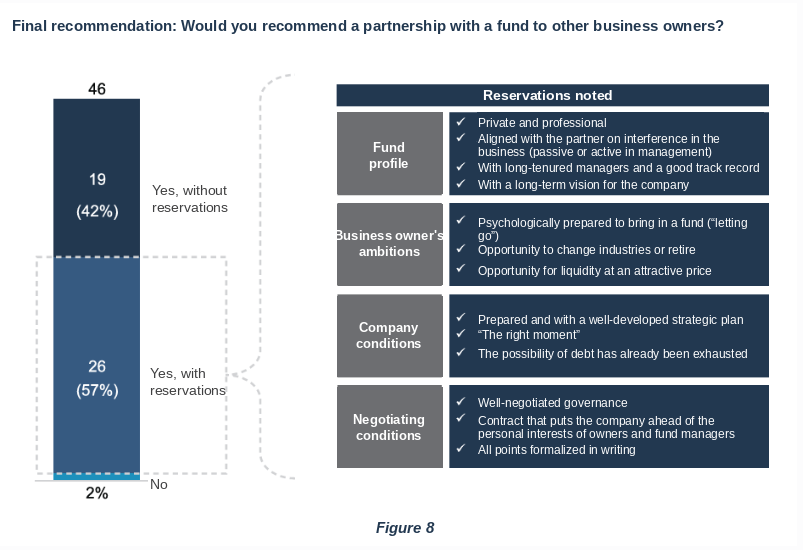
With the exception of one interviewee, everyone recommended private equity investment to other business owners, most of the time with some caveats. The main ones were:
- The need to find a suitable fund profile;
- That the business owner have ambition to grow;
- That the company be prepared for a fund; and
- That the fund's entry be well negotiated.
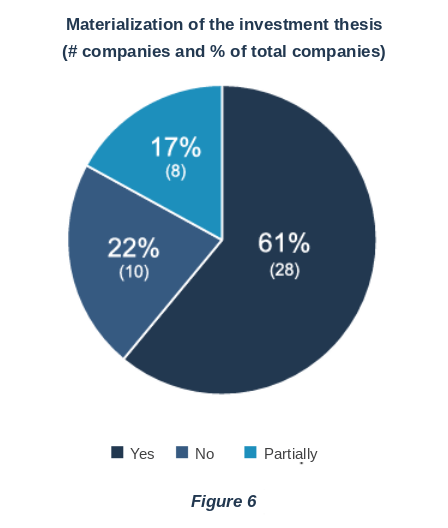
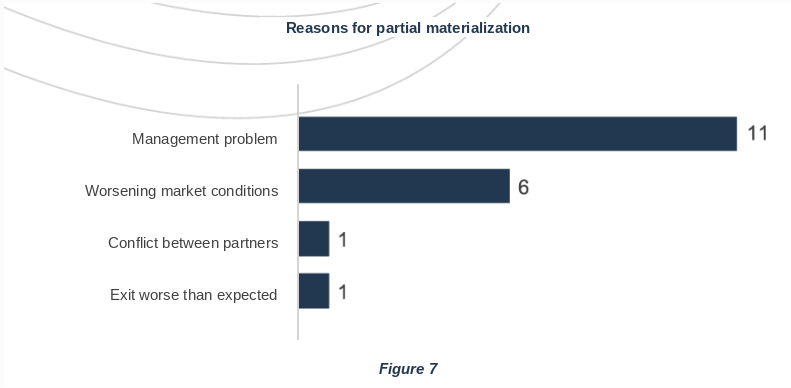
83% of respondents considered that the value creation thesis was fully or partially fulfilled. The main causes cited to explain the thesis not being fulfilled, or only partially fulfilled, were implementation problems arising from the fund's conduct and/or a worsening of market conditions.
In general, business owners adopted procedures considered standard for selecting a private equity fund: talking to several funds, hiring experienced lawyers and financial advisors, and negotiating the usual clauses of this type of investment.
Even so, there was a considerable number of business owners who did not carry out a structured fund selection process1, nor due diligence on who their new partner would be (for example, less than half of respondents spoke with other companies invested in by the fund before closing the deal). During the fund's entry negotiation, there were few cases in which the value creation thesis was built jointly by the company and the investor.
Although more than 2/3 of respondents felt the relationship with the fund was good, most reported the occurrence of conflicts. As such, the business owner who wants an investment fund as a partner must be prepared for disagreements and debates, which do not always have bad consequences. In fact, several respondents pointed out that conflicts resulted in their professional growth, as well as better decision-making.
The main disagreements reported concerned: (i) vision for the business; (ii) misalignment regarding the timing and manner of the fund's exit; (iii) turnover of the fund's team; (iv) interference in management; (v) disagreement between co-investors. From these experiences, respondents learned that candor and transparency in the relationship with the fund are essential, and that it is necessary to keep in mind that the company's side must always prevail over the individual agendas of each partner.
Most of the business owners interviewed felt that the board members appointed by the fund did not have specific knowledge of the business, but did partially contribute to the implementation of the investment thesis. The appointment of executives also contributed, with CFO being the most frequently appointed position.
According to the business owners, the major contributions the funds brought were:
- Professionalization of management and processes;
- Structuring of governance; and
- Attraction of talent.
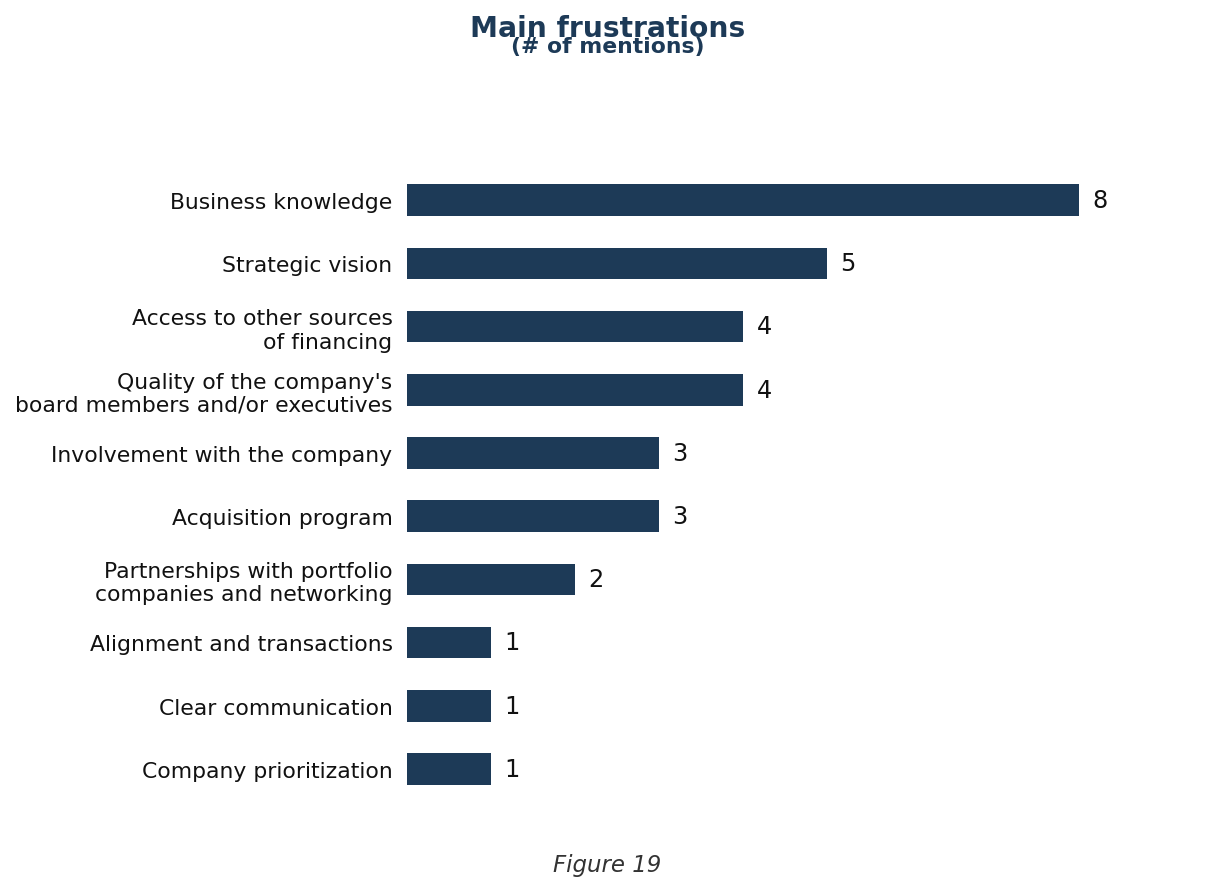
The most recurring frustration was the feeling that the fund did not have enough knowledge to interfere in the management of the business. Interestingly, some business owners complained about the funds' lack of closeness to the company's management. This indicates that careful selection of the fund, with special attention to its operating profile, and alignment, in the shareholders' agreement, on how it will contribute to the company, are essential for the partnership to work well.
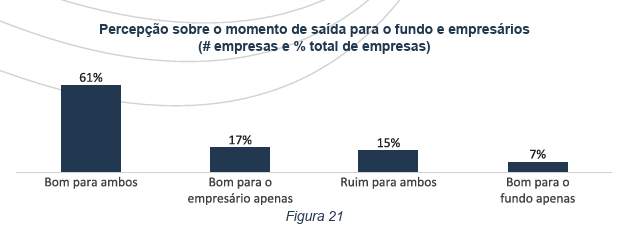
Most respondents felt that the exit occurred at a good time for both them and the fund. They reported that it is important for the business owner to be prepared for the exit, whether their own or the fund's, and to actively take part in that moment.
Sample Characterization
46 interviews were conducted with business owners who had received private equity funds and whose relationship had ended, whether through the sale of the fund's stake, the sale of these business owners' stake, or through an IPO.
The resulting sample represents around 220 years of combined relationship experience and a total amount of at least R$6.4 billion2 in investments (in nominal values).
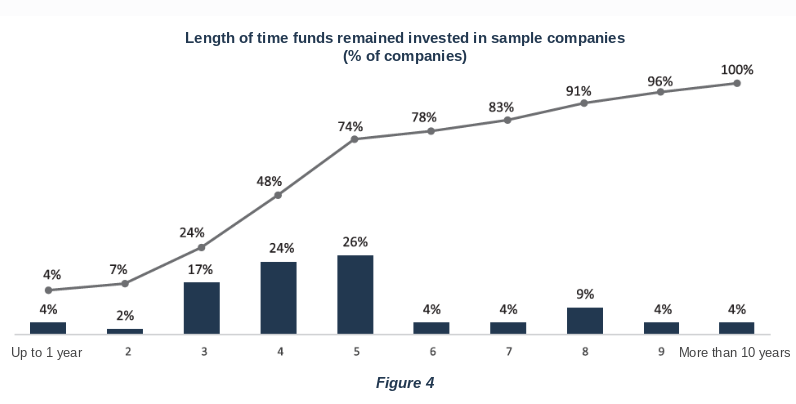
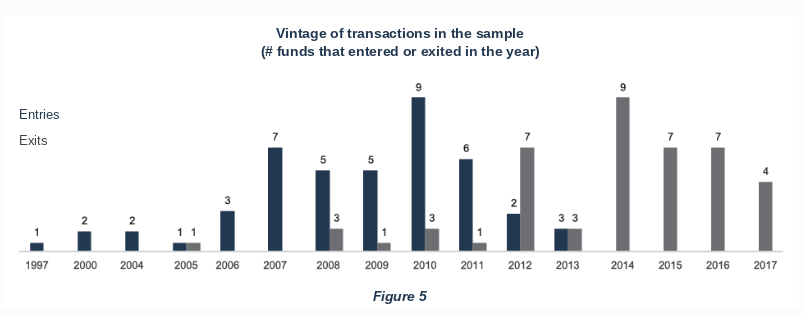
As shown in Figures 1 through 5, the sample is heterogeneous, representative of the various private equity fund choices available to Brazilian companies, and with different relationship models in terms of duration and the business owner's ties to the company after the fund's exit.
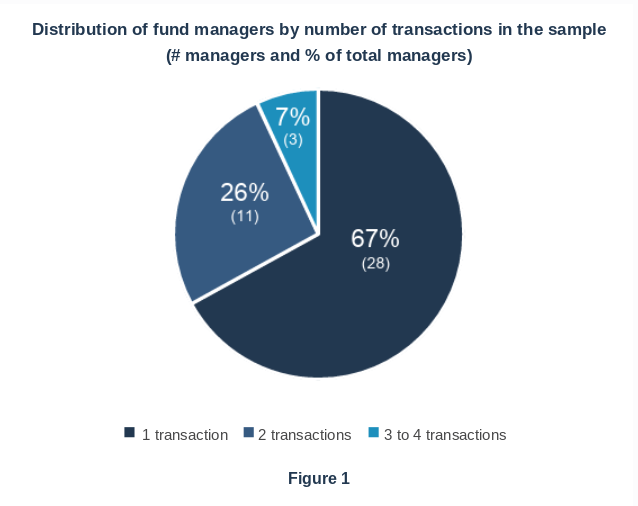
The 46 companies interviewed received capital from 42 different private equity fund managers, with more than half of the managers taking part in only one transaction.
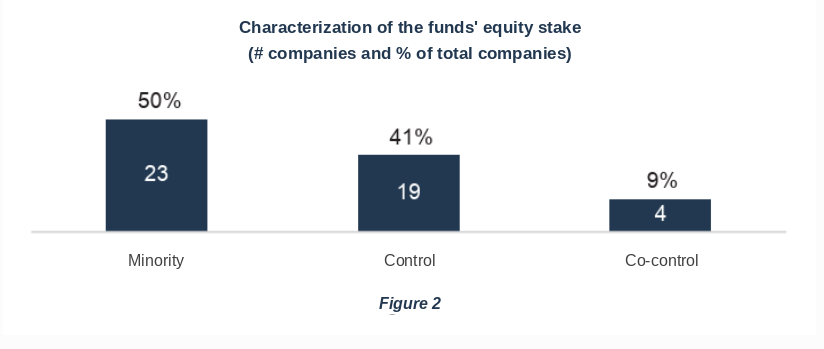
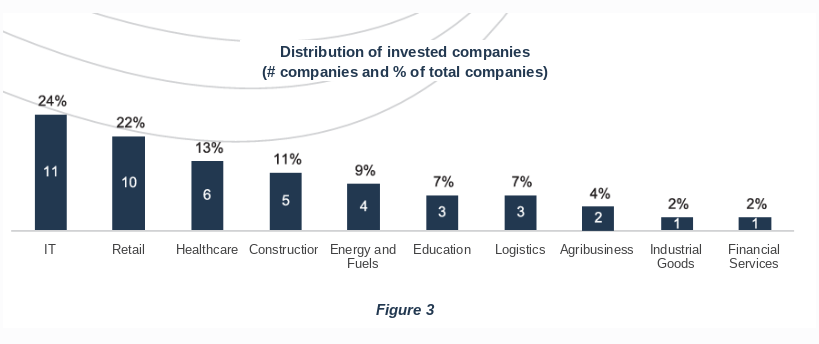
As Figures 2 and 3 illustrate, there is also a balance between minority investment and control. The companies belong to various industry sectors, although there is a greater concentration of companies in IT (24%) and retail (22%).
The average length of time funds remained invested in the companies was five years, with the fund staying between four and five years in the company in 50% of cases.
There were cases in which the fund's tenure was very short (in 6% of observations, the fund stayed two years or less) and very long (in 8% of cases the fund stayed nine years or more).
Of the respondents, almost half (46%) no longer remain shareholders of the company. Of the 21 business owners who ceased to be shareholders, only 10% remained as managers or board members.
As Figure 5 illustrates, the sample includes investments made between 1997 and 2012, with the funds' entry occurring from 2004 onward in 93% of them. An investment made is understood as a case in which the business owner or the fund had already exited the company.
Exits occurred from 2005 onward, and more than half (59%) took place in the last four years. This means the experience of the relationship with the funds is still reasonably recent.
Overall, How Is the Partnership Rated?
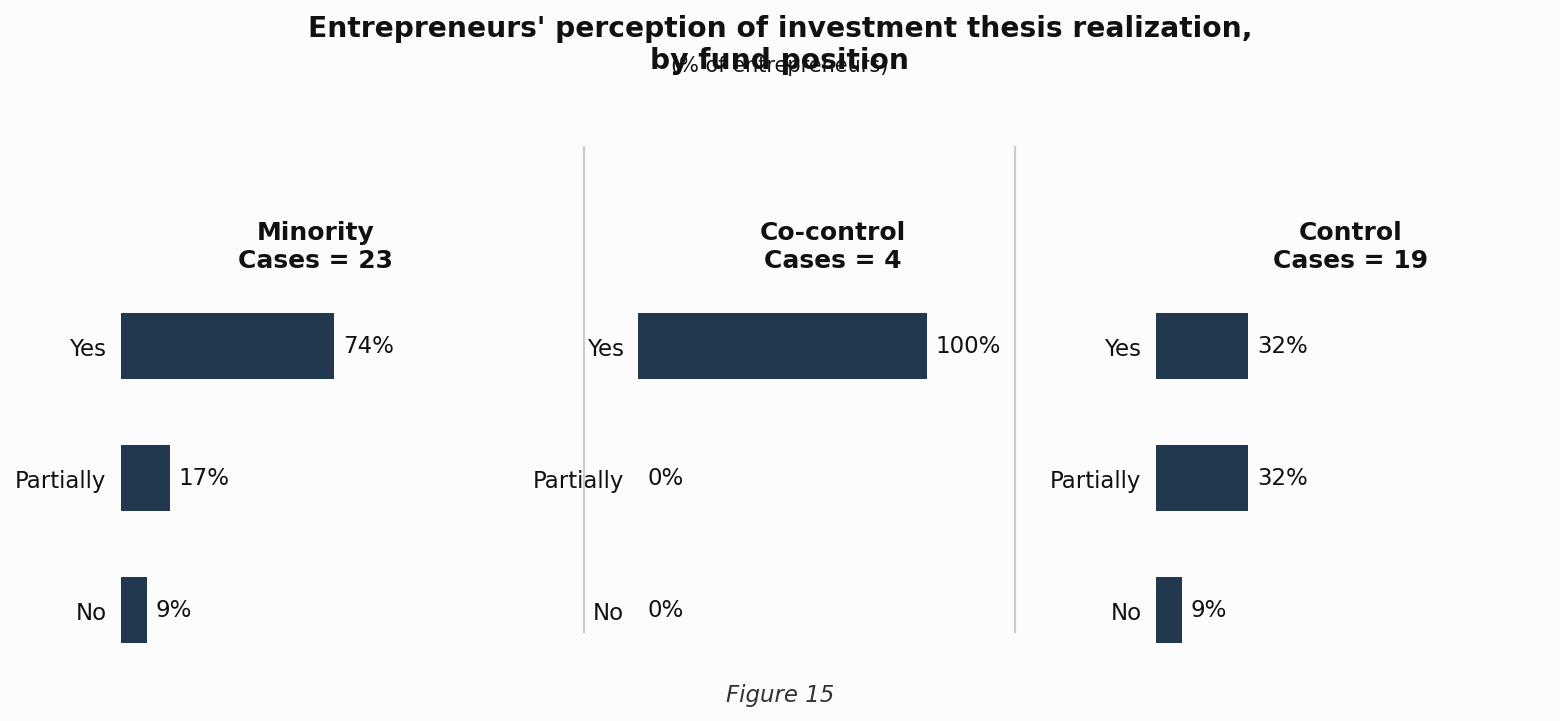
In 83% of cases, the business owners interviewed considered that the investment thesis had been fully or partially fulfilled. The main causes cited to explain the thesis not being fulfilled, or only partially fulfilled, were implementation problems arising from the fund's conduct and/or a worsening of market conditions.
When asked whether they would recommend PE investment to other business owners, the positive response was nearly unanimous: only one respondent would not recommend it. However, 57% of respondents indicated some caveat, noting that the decision to proceed or not with the transaction depends on the profile of the selected fund, the business owner's ambitions, the company's conditions, as well as negotiation aspects.
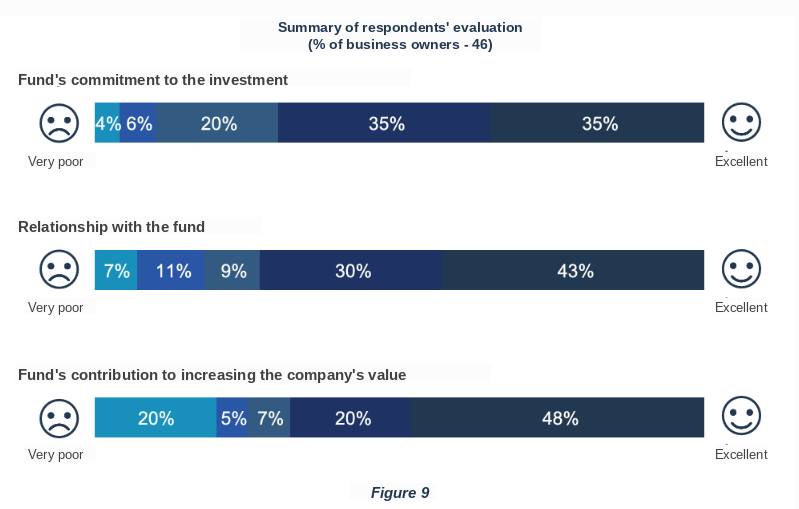
Respondents also gave scores for three distinct dimensions: the fund's commitment to the investment, their relationship with the fund, and their perception of the fund's contribution to increasing the company's value.
Detailed Examination of the Investment Stages
Entry
The entry phase comprises the decision to bring in a fund as a partner, the processes of selecting the fund, evaluating the company, and negotiating the actual sale of the equity stake.
Motivation for discussin with a fund and the investment thesis
There were various motivations that led respondents to engage in conversations with investment funds: the need for capital for growth, to structure or improve governance, to professionalize management, and even the need for a partner with some specific expertise, such as running an IPO process. There were also cases in which the business owner had not considered this investment alternative until being approached by a fund.
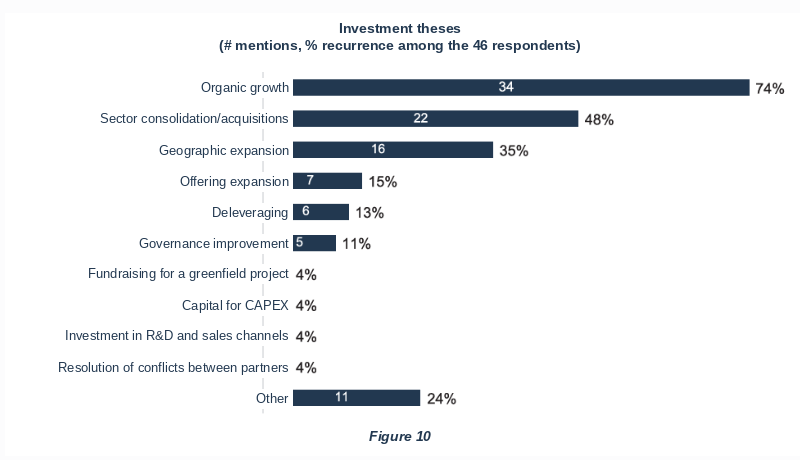
It was found that these needs are generally incorporated into the investment thesis presented to the fund.
In 87% of the sample, the investment thesis fully matched the company's needs, in most cases financial support for growth, whether organic, through acquisition, and/or sector consolidation.
It was also found that the fund's participation in developing the thesis is not very common: in only 28% of cases did the respondent state that the thesis was developed jointly (company and fund).
Fund selection process
Most respondents adopted advisable procedures for selecting and negotiating with funds: 74% of the business owners surveyed spoke with more than one fund; 76% hired lawyers with relevant experience in Mergers & Acquisitions; and 72% hired financial advisors, mostly boutiques and investment banks.
Even so, a significant number did not carry out a structured process for selecting a private equity fund. By structured process, we mean an active and systematic search by the business owner for the future partner, seeking to understand, for example, the investor profile that best fits the firm (e.g., minority or control), what type of contribution from the fund is needed to implement the investment thesis, and which funds in the market have the profile and experience suited for this. This process also includes assessing whether there is even a personal rapport between the business owner and the fund's managers.
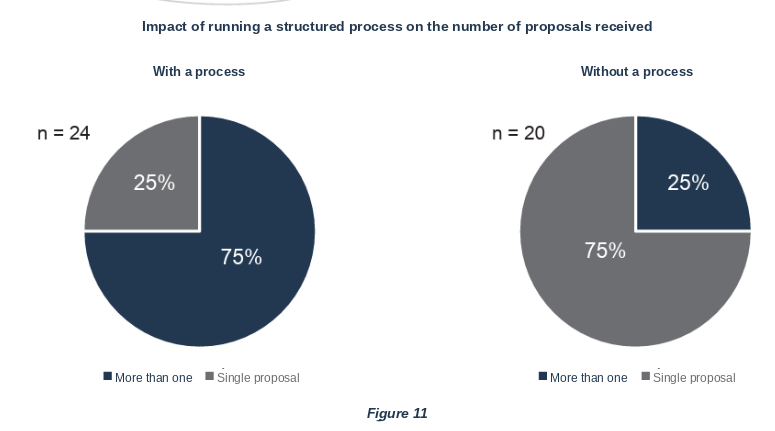
As Figure 11 illustrates, most business owners who carried out a structured process received a proposal from more than one fund (75%). On the other hand, among those who did not conduct a structured process, only 25% received more than one proposal. This indicates that an active and systematic search for a fund by the business owner can play a relevant role in the number of proposals received and, consequently, in obtaining more attractive proposals.
On the other hand, only a minority of respondents appear to have conducted a deeper due diligence on their future partner, including the track record of the fund's managers, objectives, and companies already invested in. Consulting other companies invested in by the fund is still not a widely adopted practice: less than half of the group (39%) did so.
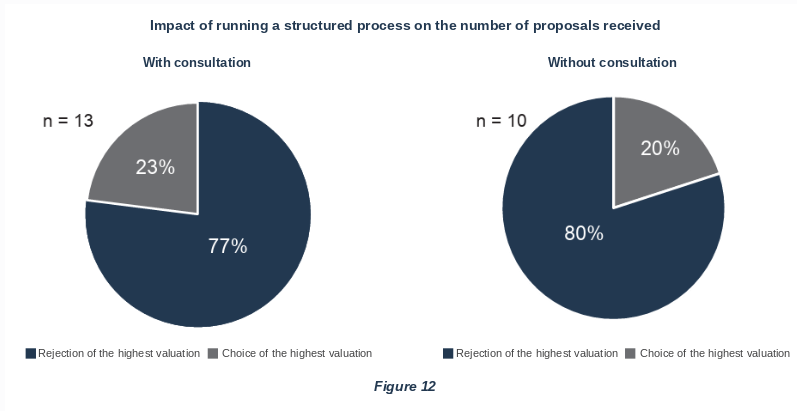
As seen in Figure 12, 77% of business owners who consulted companies invested in by the funds did not choose the highest valuation, compared to only 20% of those who did not have access to other invested companies. This is a strong indication that when information is sought from business owners who have already gone through fund investments, valuation stops being the determining factor in the choice.
Company evaluation process: valuation and diligence
Company valuations were carried out based on traditional finance methods (“valuation methods”), with the discounted cash flow method and valuation by multiples (using market multiples applied to a company metric, such as revenue or operating profit before depreciation and amortization) being the most commonly used in most cases.
The final amount to be paid by the fund is obtained by combining the financial valuation and due diligence, a stage in which price adjustments and potential contingencies are identified, sometimes with the hiring of auditors and accountants. In complex or unusual deals, some funds also use due diligence to validate operational and technical aspects.
Although not mandatory, the vast majority of respondents went through due diligence by the fund. Among them, 71% state they were fully prepared for the due diligence process carried out by the fund, 9% partially prepared, and 20% unprepared. Among the reasons recurrently mentioned for being unprepared, the lack of organized accounting and the low sophistication of the administrative team stand out.
Negotiation
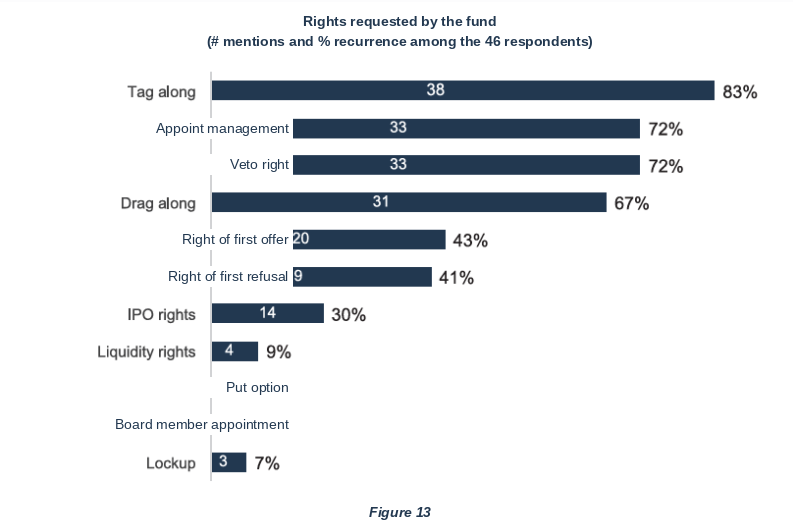
During the negotiation, not only price but also important governance aspects are defined. The clauses requested by the fund during the negotiation are those commonly required by the private equity industry, the main ones being tag along, the right to appoint management, veto rights, and drag along, as Figure 13 shows:
Other rights mentioned are:
- Anti-dilution;
- Texas Shoot-Out clause;
- Drag only on the second contribution;
- Choice of audit firm;
- Tie-breaking mechanism in board votes;
- Non-compete;
- Restrictions on related-party transactions;
- Call option;
- Right to appoint the banks in the event of an IPO;
- Appointment of the board chairmanship;
- Minimum return subject to stake adjustment;
- Stay on.
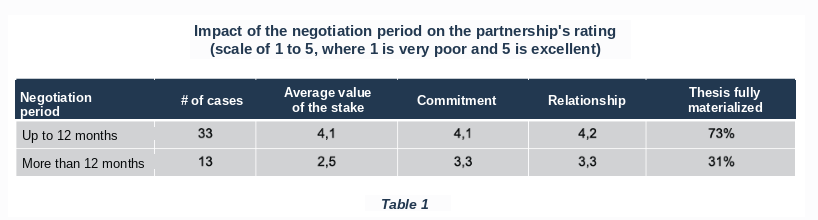
In 28% of transactions, the negotiation period exceeded 12 months. Counterintuitively, it is in the longer negotiations that the worst perceptions of the partnership are found:
Some hypotheses that would need to be tested would be: the company not being prepared for the investment, indecision about closing the deal, or even the wear and tear between partners during the negotiation process.
Lessons learned: Entry
Among the lessons learned in the selection and negotiation phase, respondents highlight that, in order to bring in a private equity fund, it is necessary to have a good reason, beyond the need for financial resources per se.
Choosing the right partner is essential, so it is advisable to talk to several funds, conduct good due diligence before making the decision, and ensure alignment from the very beginning, since the relationship will be a long one. There should be no rush to close the deal, but if the negotiations start to drag on too much, it is worth reflecting on whether the transaction still makes sense. Good advisory support and an experienced lawyer are essential to protect the business owner and avoid wear and tear in the relationship between the future partners.
Below are further details of the lessons learned:
Timing and Motivation
Lesson: Have a good reason for bringing in a fund and stay true to your ideals.
Testimonial: “Having more cash on hand to accelerate growth is not a sufficient reason to bring in a fund.”
“I feel there's an unease about how to reconcile the need for capital with the company's integrity. My recommendation is that entrepreneurs not deceive themselves, and that they not throw everything else away for the sake of financial need.”
Lesson: Be certain it is the right time to bring in a fund.
Testimonial: "I recommend waiting as long as you can before doing business with the fund. It was the most expensive money I've ever taken in my life.”
“I see a lot of people selling too early and losing the upside they could have gained by waiting for the company to grow.”
Lesson: Ensure alignment of objectives with the company's current partners.
Testimonial: “There must be alignment among the founding partners in the business about what they want. If the partners are not aligned, problems can be created. If there is no alignment, you have to buy out or negotiate the exit of the misaligned partners from the company.”
Choice and Motivation
Lesson: Run a competitive and structured process.
Testimonial: “If you can, run a competitive and structured process. Be clear about what you want from the fund and keep your company organized.”
Lesson: Conduct due diligence on the fund before making the decision.
Testimonial: “I recommend looking at the fund's history and the longevity of its executives' track record.”
“Conduct a thorough due diligence on who is going to join your company (research the management firm and its managers), and understand the dynamics between managers and fund quota holders.”
“I should have reached out to invested companies.”
Lesson: Ensure your alignment with the fund from the very beginning.
Testimonial: “Alignment from the start with your advisors and with the fund is essential.”
“The most important thing for us was bringing the right person into the right role, and the right fund for the right objective. Plan out what the relationship should look like: when choosing the fund, check whether it knows your area and is synergistic with you, and whether it knows how to do what you intend to do.”
Negotiating Posture
Lesson: Rushing to close the deal can hurt you.
Testimonial: “First, it has to be done with more long-term planning, ahead of time and without rushing. Rushing the decision and putting money in solves a short-term problem but creates another long-term one.”
Lesson: If you're going to stay in management, don't adopt an aggressive posture.
Testimonial: “We learned that the worst thing is for the entrepreneur to keep negotiating. It's good not to wear yourself out, so as not to harm the future partnership relationship with the fund.”
Lesson: Don't focus only on price: governance is equally important.
Testimonial: “I think we gave more weight to valuation than to governance. We were very focused on price and let points slip by that could have held back our growth plan.”
Lesson: Put everything agreed with the fund in writing.
Testimonial: “Write down everything that was agreed. In the future, the fund will hold on to what's on paper to enforce and assert its position. This is even worse when the manager changes midway through the investment and there's no record of what was agreed.”
“I should have put everything that was agreed in writing.”
Advisory Support
Lesson: Manage the alignment of financial and legal advisors with your objectives.
Testimonial: “Be wary of a lawyer/advisor who is trying to push the transaction through at the cost of a loss or disadvantage to you.”
“The bank acting as advisor cannot be your investor, because there's a conflict of interest.”
Lesson: Seek out good advisors.
Testimonial: “I felt I was poorly advised, but when you want to close the deal, you set that aside a bit and end up weakened.”
“Don't skimp on legal advisory. The counterparty that invested in a lawyer experienced in M&A and interested in the transaction was the one that came out of the negotiation the most successful.”
Investment period
The relationship phase with the fund, in turn, comprises the period of coexistence between fund and business owner, including board and management aspects, as well as contributions and conflicts experienced.
Misalignments between funds and business owners
Most respondents (74%) felt that the relationship during the investment period was good, although a significant portion of this group reported conflicts and misalignments throughout the coexistence. Even when the relationship is good, there are always moments of tension that call for dialogue and negotiation.
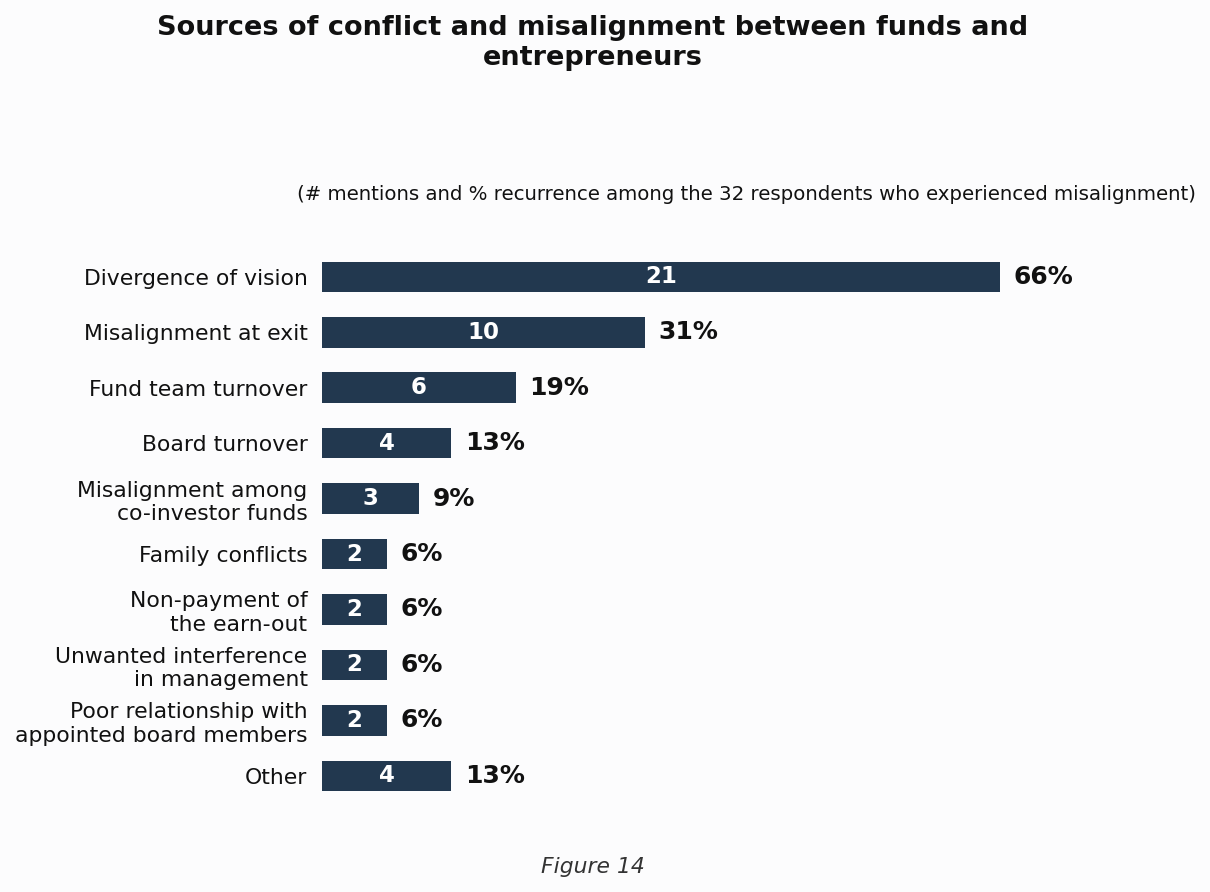
The most cited cause of conflict was a divergence of views at some point, mentioned by 66% of the 32 business owners who went through some kind of misalignment. Misalignments at exit were also common, including disagreements about the manner and ideal timing of exit, an issue mentioned by 31% of business owners.
Turnover of the fund's team was the third most mentioned cause of conflict, having been experienced by 19% of business owners. This turnover includes both the departure of managers with whom they negotiated the investment and of people in more junior roles who handled the operational and financial monitoring of the investment. Figure 14 details the sources of conflict and misalignment identified.
It can also be observed that respondents who had minority funds as partners showed a greater degree of satisfaction with the relationship compared to those who had a co-control structure or a controlling fund.
87% of business owners who partnered with minority funds rated the relationship with the fund as good or excellent, compared to 75% of those who adopted the co-control model, and 58% of those in which control of the company remained with the fund.
One hypothesis to be tested is that the dissatisfaction reflects the loss of final say in the company's decision-making, as well as the difficulty business owners have in sharing managerial power that was previously exclusively theirs.
Board members and executives appointed by the fund
PE funds monitor invested companies through the Board of Directors.
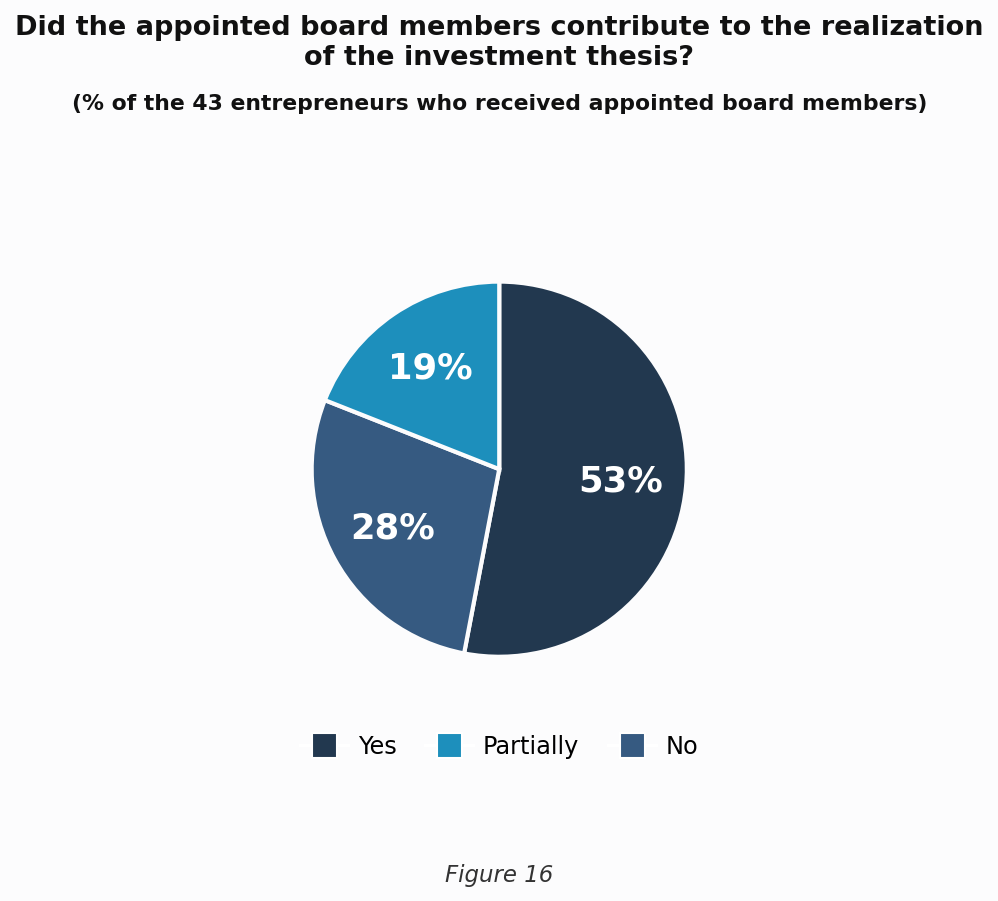
Most of the business owners interviewed who dealt with board members appointed by the fund (63%) felt that they did not have knowledge of the business.
Even so, a very similar percentage of respondents (72%) believe that the board members contributed, at least in part, to fulfilling the investment thesis.
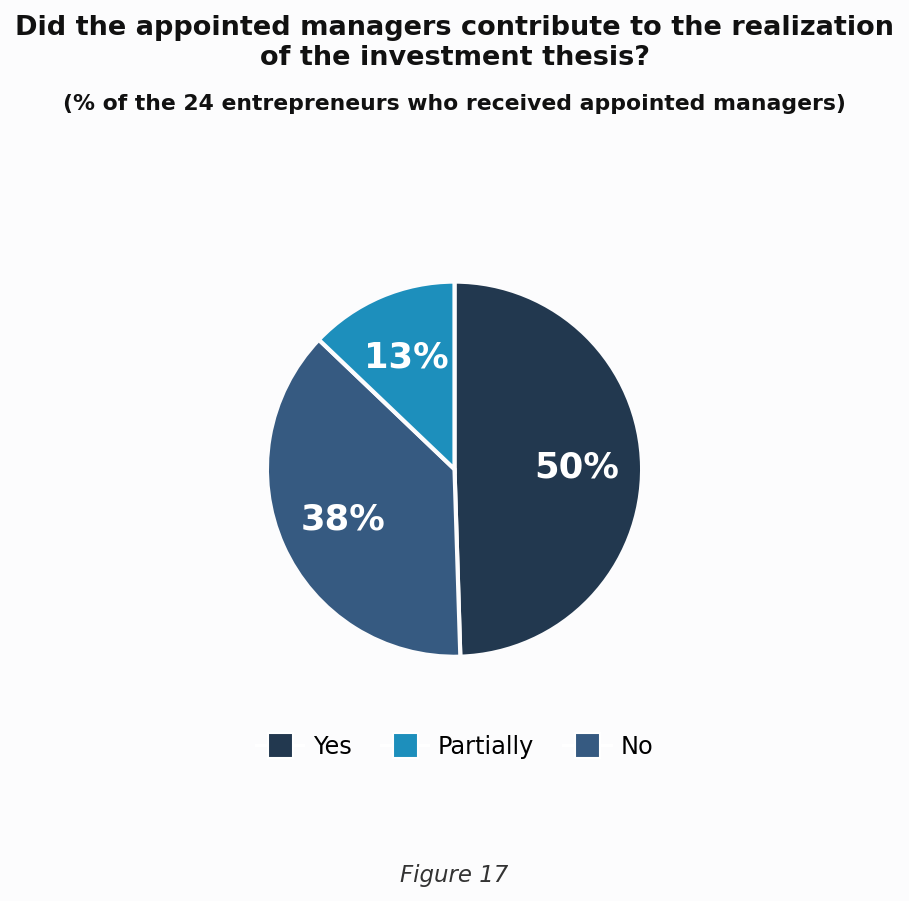
In more than half the sample (52%), the fund appointed executives to the invested company. When this occurred, the most commonly assumed position was CFO (18 of the 46 cases analyzed), and in 12 companies it was the only position recommended. The second most commonly appointed position was CEO, in nine companies in the sample. In six cases, there was a turnover of the entire executive board or of more than three directors.
Considering only companies in which the fund appointed executives, in 63% of cases the business owner felt that the appointed managers contributed, at least partially, to fulfilling the investment thesis.
Contributions and frustrated expectations
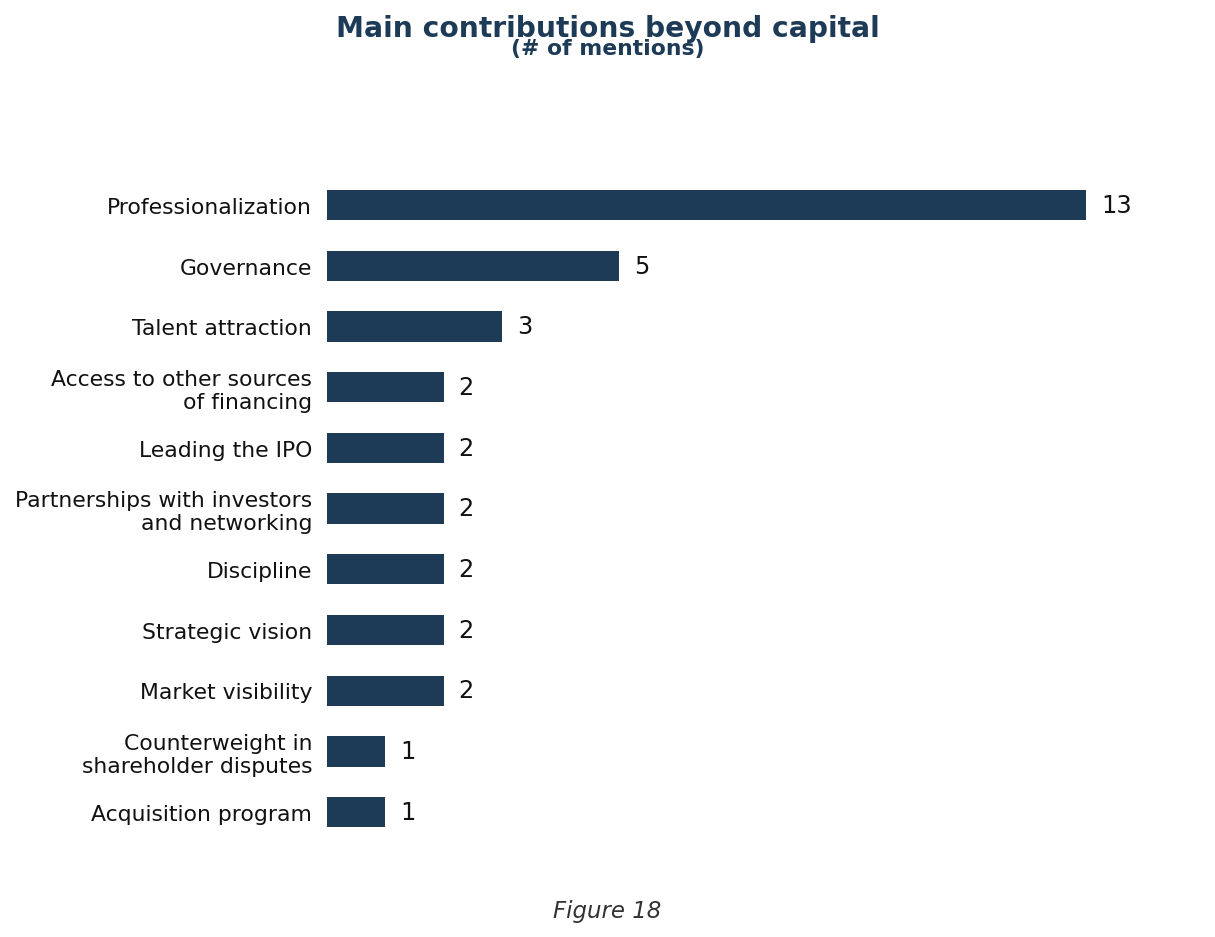
Of the total respondents, 67.5% acknowledge that the funds brought other contributions beyond capital. However, the group that considers the funds brought nothing beyond capital reported no frustration. Some genuinely wanted more passive financial partners, as they felt they were already structured to execute the investment thesis. There are also business owners unhappy with the relationship because they felt the fund was excessive in its interference in management.
The main contributions cited were the professionalization of management and processes, and the improvement of governance standards, as well as the attraction of talent as executives and board members.
The most recurring frustration was the business owner's feeling that the fund did not have enough knowledge of the business to interfere in management productively.
It was found that some expectations deserve greater attention from funds for appearing both among the main contributions and among the main frustrations (when not delivered), with emphasis on: strategic vision, access to other sources of financial resources, partnership with other companies invested in by the fund, and networking.
Lessons learned: coexisting with the fund
Several business owners value maintaining a candid and open relationship, without fear of opposing the fund on decisions they know will destroy value. Other respondents recognized that the relationship created opportunities for professional growth. Another shared lesson was the importance of aligning expectations and agreeing on rules before the fund's entry. Below we detail the lessons shared:
Governance
Lesson: Reporting to the board must be appropriate and realistic.
Testimonial: “The most important thing when you step out of day-to-day management is to create appropriate reporting. It's very easy to spend a year seeing reports that don't show the truth.”
“It was better to say something more realistic and surprise people than to show a high projection and disappoint.”
Lesson: The executive team runs the day-to-day. The board should monitor and intervene only when necessary.
Testimonial: “One thing I think we got wrong is that the executive team ended up with little power, while the Board of Directors had total power. This was very bad for the company because there wasn't an executive team making decisions, but rather a board that decided, and the board wasn't made up of people qualified to run day-to-day operations.”
“I also noticed that the investment worked out because they were close to the company but didn't meddle in operations. Each partner knew how to play their role.”
Lesson: Be prepared for possible turnover of the fund's team.
Testimonial: “I would have negotiated clauses providing protections in the event the fund's managers left.”
Lesson: Document everything whenever possible.
Testimonial: “I would have better documented the discussions.”
Management
Lesson: Show the fund the importance of your vision for the business.
Testimonial: “During the investment, we should have been more objective and less accommodating with them. We got a bit scared by their arrival and didn't know how to assert ourselves and show that we knew the business and they didn't.”
“Sometimes the fund gets too focused on the target and forgets the risks along the way. Whenever you identify risks, push back.”
Lesson: Work with the fund.
Testimonial: “It's very important to have a degree of trust in the fund in order to work together.”
Lesson: Don't let information requests get in the way of the company's day-to-day operations.
Testimonial: “It's important that the fund's information requests fit into the company's workflow in a balanced way.” “If I had prepared all the reports they wanted, the company would have become very slow.”
Conflicts and Frustrations
Know that perspectives are different.
Testimonial: “The business owner's product is the company's product, while the fund's product is the company. It's important for the entrepreneur to realize this in order to avoid decisions that only benefit the company as a product.”
“Know that the fund's math is different from yours.”
Lesson: Candor, transparency, and dialogue are essential.
Testimonial: “Deal openly with the fund. Don't benefit from being cagey. Lies and omission have a short shelf life.” “Always tell the truth. Once the fund realizes it's been deceived, it loses trust.”
Lesson: Avoid conflict, but know how to assert yourself when necessary.
Testimonial: “You need to know how to play a political game. Don't push back too directly, seek to avoid conflict, and always try to calm things down.”
“I learned to avoid bringing up the contract at the table and to keep the fund's enthusiasm in check around some overly aggressive moves.”
Learning Opportunities
Lesson: Take advantage of the professional development opportunities brought by the fund.
Testimonial: “As a young entrepreneur, I had the opportunity to develop as a manager thanks to being around that group.”
“The fund could enable contact among entrepreneurs of its portfolio companies so we could share experiences.”
Lesson: Use the accountability process to mature as a manager.
Testimonial: “The fund brings a series of information requests and strategic questions. This is important for the company's maturing because it forces the search for answers and improvements.”
Exit
The exit phase covers aspects such as the manner of exit for the fund or business owner, perception of the timing as good or bad, the business owner's desire for and achievement of liquidity, among others.
Analysis of the fund's and/or business owner's exit
Exit is a critical factor for PE funds: business owners must prepare for this phase, since various conflicts of interest and potential misalignments can arise.
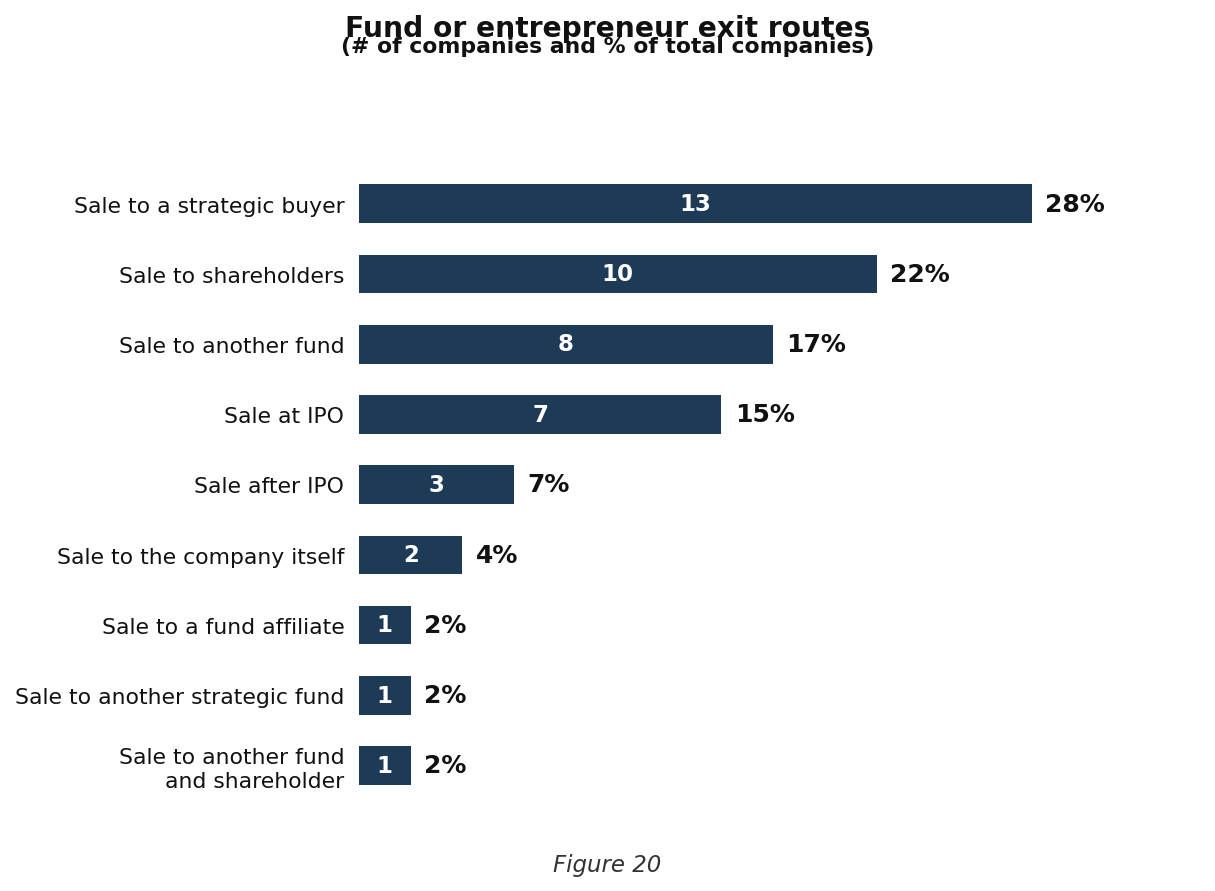
In the sample analyzed, most exits (13 companies) occurred through a sale to a strategic buyer (another company with competing or complementary business), followed by a sale to the shareholder (10 companies), and a sale to another fund (8 companies). In 87% of cases, the PE fund exited before or at the same time as the business owner. In only 13% of cases did the entrepreneur exit before the fund.
It is interesting to note that, even though admittedly a potential source of conflict, the exit moment is rated by most respondents as good for both the business owner and the fund. Only 7% of respondents describe the exit as good only for the fund.
In five of the 46 companies, governance clauses were invoked, distributed as follows: two cases of a put option, one right of first refusal for the fund, one drag along, and one tag along.
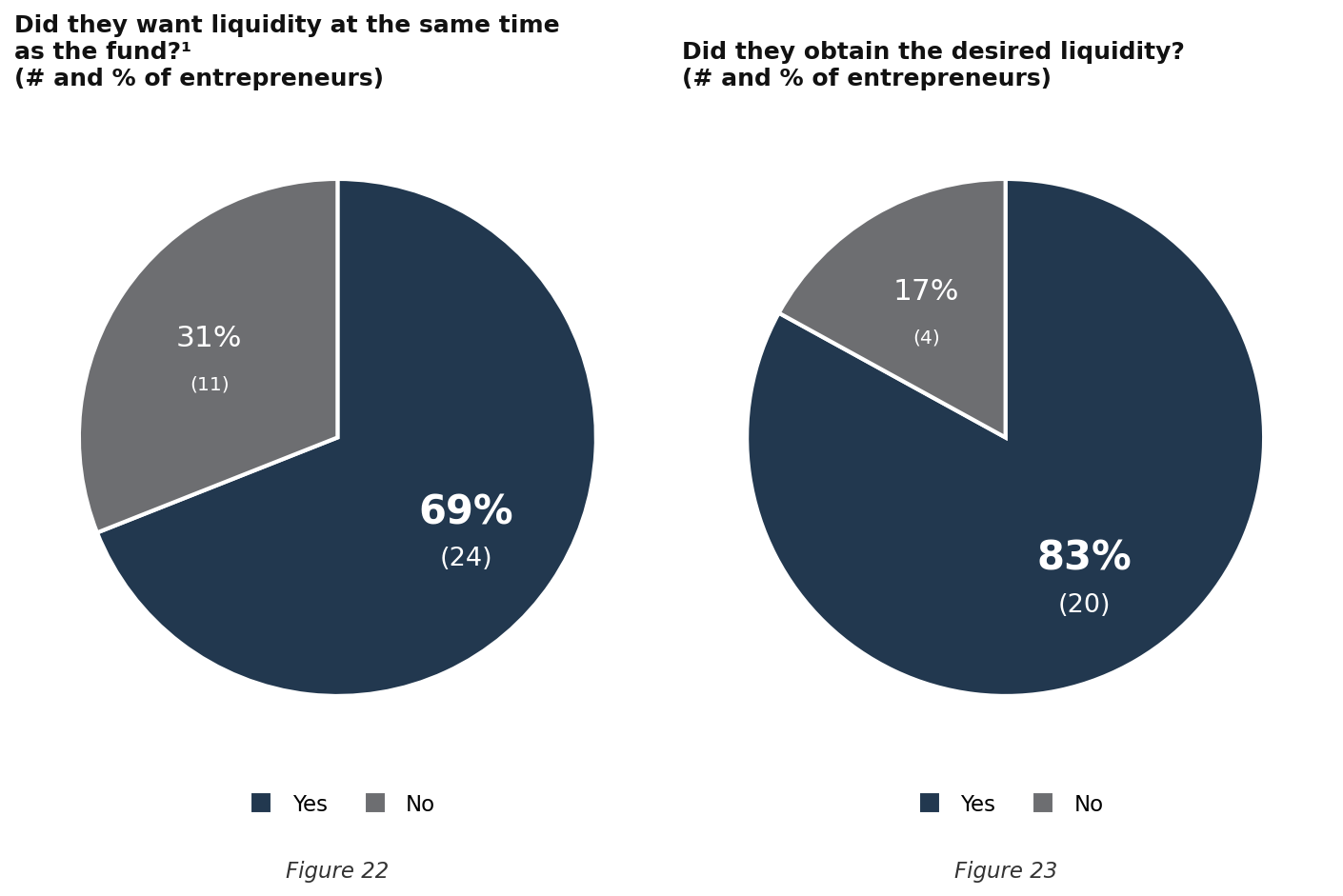
Most business owners wished to have liquidity when the funds exited and, in general, were successful in obtaining that liquidity.
The financial valuation methods most used at exit were the same ones that predominated at entry: Multiples (35%) and Discounted Cash Flow (14%).
Business owners recommend that those seeking PE investment be prepared for the partner's exit and actively take part in that process. Above all, respondents note that it is important not to lose focus on the business during the exit negotiation. Below we summarize the lessons for the exit phase:
Planning
Lesson: Be prepared for the fund's exit.
Testimonial: “If I had anticipated the exit plan, it would have been better for negotiating.” “The entrepreneur must prepare psychologically for the exit. Some people are very attached to the people and the business. I, for example, avoided going to the company for two months after the transaction to complete the exit cycle.”
Lesson: Know how to identify the best time for the exit.
Testimonial: “The fund's greed can make it miss the timing of the exit. We missed excellent opportunities to make more money.”
Lesson: Actively take part in the fund's exit.
Testimonial: “You have to monitor and help with the fund's exit. It helps a lot. The fund's problem is also a problem for the other partners, since they will end up tied to the new partners who will come in.”
“I followed the fund's exit closely because I was an interested party. The fund was a good partner during the exit, keeping me informed about the progress of the process. As a result, I made myself available to help them, talking with potential investors. It was a normal and successful exit. I think that if the deal doesn't work out at the start, it's better for the business owner to leave soon and not wear themselves out.”
Negotiation
Lesson: Prioritize the points most sensitive to you.
Testimonial: “Know how to prioritize the clauses you want to win, choose the ones you're going to lose because it's impossible to win them all.”
Lesson: Be careful not to lose focus on the business during the negotiation.
Testimonial: “We lost focus on the business to deal with this negotiation. The fund didn't have much flexibility to negotiate, always arguing it was the investor's ‘standard’ or ‘rules.’”
Lesson: Anticipate future risks.
Testimonial: “At that time, I wasn't too worried about the percentage I would end up with. Today, I'm afraid of a hostile takeover after the share price fell from R$35 to R$2.”
Conflict
Lesson: Be prepared for misalignments.
Testimonial: “Be careful with exit attempts that are misaligned with your future and the company's.”
Lesson: The relationship during the investment period is a good gauge for predicting conflicts at exit.
Testimonial: “Since our partnership was harmonious, we didn't have major problems. I think it was good that we aligned the exit together, thanks to the support the fund gave me, so the strategic buyer would also purchase my stake.”
“We eased governance to help the fund sell, and that was only possible because we had a good relationship with them.”
“The fund said it would not sell to someone we didn't want, and it was very fair on this point.”
Learning Opportunities
Lesson: Don't let advisors stall the transaction.
Testimonial: “Nothing against lawyers, but to make a deal, sometimes you need to get them out of the room. I took a trip alone and, with the buyer at the hotel, closed the deal successfully.”
Lesson: Don't undermine your advisors in front of the other side.
Testimonial: “The relationship with the advisory bank wasn't good, but we avoided undermining the people we hired. Doing that weakens you; be pragmatic.”
Conclusion
The interviews highlighted several lessons about the relationship between business owners and funds. Some examples:
It is important to have a strong and coherent motivation for forming a partnership with the fund, one that isn't purely financial.
There should be no rush to close the deal.
Candor and transparency of dialogue must prevail throughout the relationship.
The company should prepare from the outset for the fund's exit.
The big lesson is that the business owner who wants this type of partner must carry out a structured and diligent fund selection process.
Funds are temporary partners and, after some years in the partnership, taking part in strategic decisions and influencing management, need to sell their stake and return the capital to their investors.
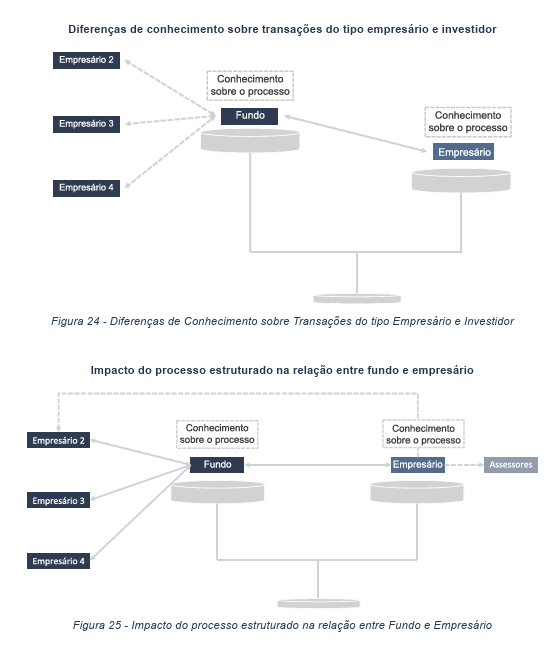
It is already known, before the investment takes place, both for the business owner and for the fund, that the moment of exit will occur. The difference is that the PE fund carries out different transactions and, with each transaction with a different business owner, learns about the investment process.
As funds are constantly learning, they expand their skills and negotiating abilities. Business owners, on the other hand, take part, most of the time, in only that one transaction, and that investment represents the “business of their life.”
The key question is: the business owner should be aware that the PE fund holds greater knowledge of the process, and that there are different profiles of PE funds. There are more aggressive ones, more conciliatory ones, those that want control, and those that want to participate as minority holders.
If funds have different profiles, the business owner should deliberately seek information about their potential partners. Above all, they should talk to invested companies.
That is why it is so important for the business owner to carry out a structured fund selection process. Through this process, the business owner can gather important information that allows them to occupy a privileged negotiating position and, above all, achieve better initial alignment with the fund, paving the way for maximizing the value of the deal.
Along the same lines, the business owner should invest time and attention in hiring financial and legal advisors who have experience in the field (helping improve bargaining position) and who have no conflicts of interest in the negotiation.