
A practical guide for acquiring a company in Brazil
M&A in Brazil: an overview
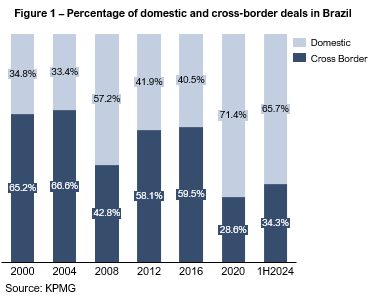
Since the liberalization of the Brazilian economy in the 1990s, M&A has been a common strategy for foreign companies to establish a presence in the country. Before the Covid-19 pandemic, cross-border deals accounted for more than half of the total transactions, playing an important part in the M&A activity in Brazil. In most cases, entering the country through an acquisition stands out as a simpler alternative than starting a greenfield operation, given the sheer size and complexity of the market and the advantage of leveraging the local knowledge that a well-established company provides.
Acquisition of Lojas Avenidas by the South African retail juggernaut Pepkor (undisclosed sum);
There are successful cases of players from different countries and industries expanding into Brazil. At the end of this paper, we briefly explore the following deals and their key success factors:
Bupa’s, the British health insurance company, acquisition of Care Plus (undisclosed sum); and
Domestic buyers are frequently at a disadvantage when competing for an asset with foreign buyers due to the lack of proper local financing for M&A. Interest rates have been historically quite high in Brazil, and local banks are reluctant to provide long-term credit.
Heineken’s acquisition of Schin, a local brewery company, for approximately USD 700 Mn.
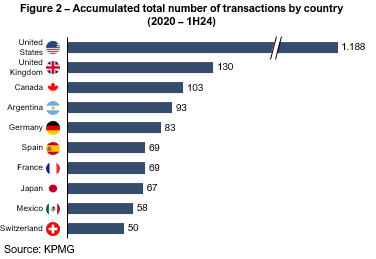
The local debt market also does not provide instruments in local currency with sufficient maturity to adequately finance an M&A transaction. To this day, cross-border deals are mostly led by investors from the United States, followed by the UK, Canada, Argentina, and Germany.
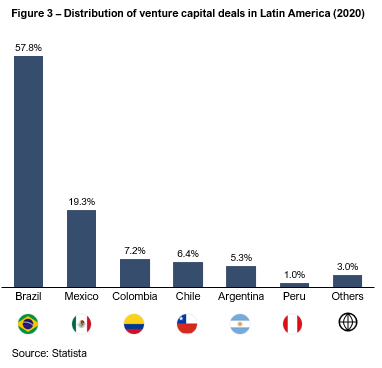
In recent years, Brazil has cultivated a dynamic ecosystem for innovation, marked by the rapid growth of incubators, accelerators, and venture capital firms that actively support entrepreneurs. This expansion has been partly driven by the maturation of the regulatory framework for startups, with particular recognition of Brazil’s Central Bank’s progressive initiatives in the payments and fintech sectors. These efforts have positioned Brazil as a leading innovation hub in Latin America, propelling the country to the forefront with the highest number of venture capital deals in the region.
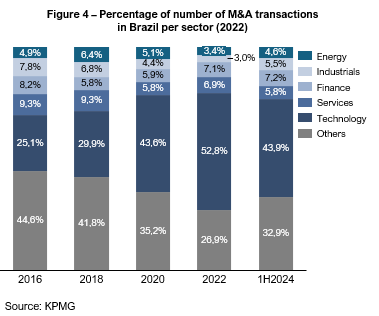
As a result, the technology sector dominates in the number of M&A transactions, followed by services, financial institutions, industrials, and energy.
Economic and political snapshot
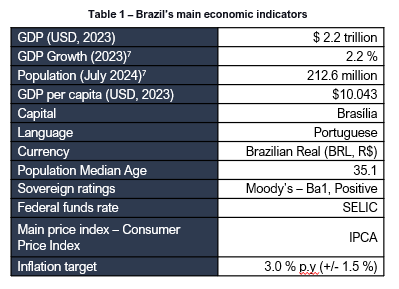
Brazil is a Federative Republic comprised of 26 states, 1 federal district, and over 5,000 municipalities. With a GDP of USD 2.2 trillion1, an area of 8.5 million2 km², and a population of over 210 million people3, Brazil stands as the largest3 economy in Latin America and the 9th in the world (2023), while also being the 5th largest country and the 7th most3 populous.
Like many other countries, Brazil’s population is unevenly distributed across its territory, with three states – São Paulo, Minas Gerais, and Rio de Janeiro – concentrating ~40% of the population3. This reflects the distribution of business opportunities, as the same three states account for ~50% of the country’s GDP3.
São Paulo state, home to the largest and most populous city in the southern hemisphere, alone accounts for ~30% of Brazil’s GDP3, positioning itself as the country’s financial and business capital. The state’s economic significance is further highlighted by its status as a major transportation hub, with the largest airport in Latin America4, a well-developed network of highways, and the headquarters of the largest stock exchange in Latin America, B35.
The state of Rio de Janeiro, known for its postcard beaches, accounts for 10.5% of Brazil’s GDP, driven by its oil and gas industry. Meanwhile, the state of Minas Gerais, with its major mining and agriculture operations, accounts for 9.5% of the country’s GDP.
Overall, the abundance of natural resources, fertile land, and favorable climate conditions have contributed to the success of Brazil’s agricultural industry.
The country dedicates approximately 56% of its land to agriculture (~33%) and pasture (~23%)2, with innovation in these sectors being mostly led by the state-owned company Embrapa and by private companies, allowing the country to maintain a competitive advantage. Brazil is the world’s largest producer of many agricultural commodities, such as coffee, sugar, and orange juice. It is also the leading exporter of soybeans, corn, beef, and poultry, the second-largest exporter of iron ore, and the eleventh-largest oil exporter.
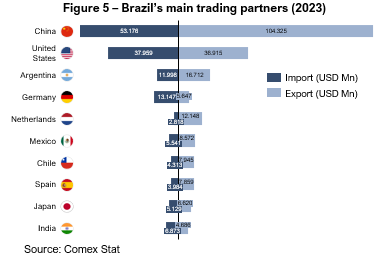
Brazil’s main imports are manufactured goods (89% of total imports), such as refined petroleum, lubricants, machinery, motor vehicle parts and accessories, and fertilizers. China is Brazil’s largest trading partner, with both countries sharing strong economic ties. The United States follows closely behind, with Argentina, Germany, Netherlands, and Mexico also playing significant roles in Brazil’s import and export markets.
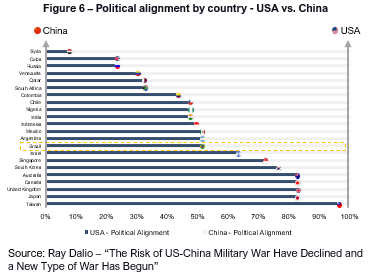
Diplomatically, Brazil maintains fairly good relations with the world’s leading economic powers — China and the United States — serving as a neutral and attractive destination for investors from both nations. This strategic positioning, combined with Brazil’s economic growth and well-established capital markets, has made the country an attractive destination for global investment. In the first half of 2024, Brazil was the second largest destination of all Foreign Direct Investment (FDI) in the world, just behind the USA.
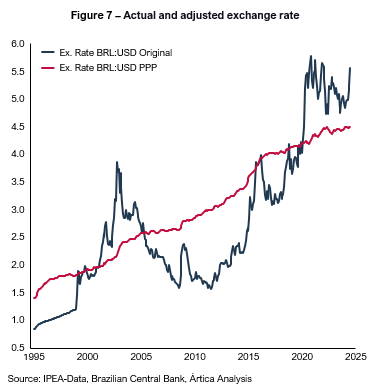
The Brazilian Real and the economic plan behind it have allowed Brazil to tame inflation, and the currency has experienced reasonable stability since its introduction in 1994. This is especially important for companies considering relevant, long-term investments in which the return on investment is expected to occur over several years.
As the chart below illustrates, the relationship between the Brazilian real and the US dollar oscillates around a point of equilibrium when adjusted for the inflation differential between the countries. While periods of currency overvaluation or undervaluation can persist for extended durations, the Brazilian Real is expected to eventually return to its equilibrium as the country operates with a floating exchange rate regime6.
1IMF – 2023 GDP, current prices (billions of U.S dollars)
2CIA – The World Factbook
3Ministry of Foreign Relations Brazil; IBGE
4GRU Airport website
5Cross-border Listings Guide – Baker & MacKenzie
6Although various theories attempt to define a “fair” exchange rate, accurately predicting it is nearly impossible due to many influencing factors. However, over the long term, research suggests that exchange rates tend to align with Purchasing Power Parity (PPP) between currencies.
7IBGE – Brazilian Institute of Geography and Statistics
8World Bank – Current USD
9CIA – The World Fact Book
10National Treasury – October 2024
11Brazilian Central Bank – considering the 2024/2025 period
Buy or build dilemma: entering organically or through an acquisition?
I. Overview
The decision to enter a new country is most often driven by the need to access new markets or eliminate the “middleman,” enhancing margins and getting a better grasp on the local consumers. Sometimes, it can also be used to acquire new technologies or products. As one of the largest economies in the world, Brazil often appears as a potential geography in strategic discussions of companies planning to grow abroad. However, breaking into the Brazilian market is no easy task, as the country has many regulatory bodies, tax intricacies, and a complex business culture.
Within this scenario, companies often find themselves caught in a dilemma when envisioning an expansion into Brazil: whether to acquire an existing local company or establish their own local operations from scratch. This chapter will explore the nuances of the decisions faced by investors and companies and present the pros and cons of each option.
II. The buy or build dilemma
Starting a business from the ground up allows complete control over the company’s operations, strategies, and culture. It also appears to be cheaper than acquiring a local company. However, building a business without the appropriate local knowledge can actually be expensive and time-consuming – which in Brazil is, in fact, the most likely outcome. As pointed out in the latest edition of The World Bank Doing Business report, which measures how friendly the business environment is, Brazil ranks 124th among 190 countries, with “Starting a Business” being one of the lowest-ranking categories. Therefore, in today’s ever-developing technologies landscape and dynamic global economy, following this path can mean missing the market window and lagging behind international and local competitors.
More recently, this was the case for the German digital bank N26. The European fintech announced its intention to enter the Brazilian market in 2019 but only got its bank license from the Brazilian Central Bank and started to fully operate two years later, in 2021, with a waitlist of around 200,000 customers. During this time, local competitor Nubank grew from 20.1 million customers in Q4 2019 to 53.9 million in Q4 2021, an increase of nearly 34 million users by the time N26 started operating. The German fintech announced its exit from Brazil in 2023, just two years after entering the country.
Another issue that makes “organic” entrance in Brazil more complex is its own sheer size and regional differences. Selecting the wrong state to start operations may make the new entrant lose competitiveness due to state-level taxes, logistics costs, or even talent availability. Customer-facing businesses also have the challenge of expanding organically, as regional differences can be quite relevant. Even Brazilian companies sometimes struggle to expand to other parts of the country and quite often either decide to keep a regional operation or to enter another region through an acquisition.
Santander implemented a different strategy – mixing greenfield and brownfield. The Spanish banking giant opened its first office in Brazil in 1982, increasing its local presence and expanding geographically in the country through several acquisitions. Starting in 1997, Santander acquired Banco Geral do Comércio. In 2000, it acquired Banco Meridional, Bozano Simonsen, and Banespa, expanding its regional presence in retail and investment banking. Between 2007 and 2010, the bank consolidated its local operation by acquiring Banco Real and subsequently had the biggest IPO in Bovespa up to that point. This strategy has proven successful for the bank, as Santander continues to be one of the major banking institutions in Brazil, with the Brazilian operation representing around 30% of the bank’s global profits.
Acquiring an existing local company can provide immediate access to an established customer base, distribution networks, local expertise, and existing assets. This approach has proven successful for some, such as the Chinese group State Grid, one of the largest state-owned utility companies in the world, which acquired Plena Transmissoras in 2010. Since then, the group has made another major acquisition, CPFL Energia, and became one of the most prominent players in Brazil’s energy sector.
Even though acquiring a company can expedite market entry and potentially reduce the risks of starting from nothing, finding a good company to buy in Brazil can be challenging. With over 20 million companies registered in the country but only 600 listed companies, it can be difficult to identify high-quality targets. There is little reliable public data available about companies, as private companies are not obliged to publish their financial statements, further complicating the search. In this context, an acquisition requires a time-consuming market study, usually a demanding approach to the individual players, and the signing of non-disclosure agreements to obtain minimal useful information from private companies to better understand the competitive landscape and find the best available targets.
The cultural aspect: building relationships
I. Overview
Personal relationships and effective communication play an essential role in the way people do business in Brazil. A valuable framework for understanding how different cultures approach business interactions is Erin Meyer’s “The Culture Map“12:
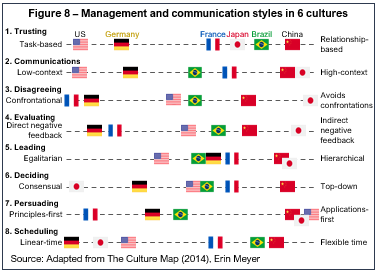
In this chapter, we will explore the nuances of the Brazilian culture and how they are reflected in business negotiation. As a “rule of thumb,” Brazil is often positioned between extremes of management and communication styles, which is helpful for foreigners to appreciate in M&A contexts.
12 Erin Meyer is a professor at INSEAD, one of the leading international business schools. Her work focuses on how the world’s most successful managers navigate the complexities of cultural differences in a global environment.
II. The Culture Map applied to the Brazilian business landscape
1. Trusting: relationship-based
Trust is built through personal relationships rather than purely through task completion. Successful corporate relationships often start with building trust and rapport, which significantly influences business dealings. This means investing time in understanding partners’ business contexts and personal motivations.
Initial meetings are typically used to build relationships rather than to advance the deal negotiation, as Brazilians typically prefer to know who they are doing business with before making binding decisions. Negotiations may proceed leisurely, with a few meetings devoted to establishing mutual trust and understanding before getting into the finer business points, which can be frustrating for some cultures.
Lunch and dinner meetings are common and important opportunities to discuss business in a more relaxed and personal setting.
Additionally, face-to-face meetings are essential for strengthening bonds. These in-person interactions are viewed not just as formalities but as opportunities to connect on a personal level. The physical presence, eye contact, and personal engagement help solidify relationships, demonstrating commitment and respect toward business partners. For a Brazilian business owner, even receiving an indicative offer for their business without a visit, based solely on the financial statements, is not well regarded.
2. Communications: moderately high-context
Communication is moderately high-context, requiring attention to non-verbal cues and implicit messages. Gestures, tone of voice, and facial expressions are integral and can carry specific, critical meanings in negotiations. Understanding these subtleties is vital to effective communication and can prevent potential misunderstandings.
For instance, in Japan, communication relies heavily on reading between the lines and understanding implicit messages, a concept known as “reading the air” – according to Erin Meyer’s Culture Map, Japan has the distinction of being the highest-context culture in the world. Conversely, in the US, communication tends to be more direct and explicit, with less emphasis on non-verbal cues. In Brazil, while the context is not as implicit as in Japan, it is more so than in the US, making it essential for foreigners to grasp the subtleties of indirect communication. In an M&A negotiation, an American executive may need to explicitly state every detail to ensure clarity, whereas a Brazilian might find this approach redundant or even distrustful.
Another key consideration is that, overall, the Brazilian population has limited proficiency in English. This is especially true among family-owned businesses, both at the executive and the shareholder level. Therefore, using a translator or a local advisor is important to ensure clear and effective communication.
3. Disagreeing: moderately avoids confrontation
Brazil tends to manage disagreements with a moderate avoidance of confrontation, more so than Germany but less than Japan. Conflicts are approached diplomatically, aiming to maintain relationships while still addressing issues.
This tendency can sometimes be surprising to foreigners, especially in how Brazilians often avoid saying “no” directly. Instead, they might use vague phrases that do not always mean agreement but rather a non-confrontational way to defer a decision or express doubt. This indirectness can lead to misunderstandings if not correctly interpreted. Foreigners should be prepared to read between the lines and understand that a lack of direct refusal does not necessarily signify agreement.
4. Evaluating: indirect negative feedback
Negative feedback is typically given indirectly, cushioned by positive comments to avoid harming relationships. For instance, in the context of M&A negotiations, when faced with a proposal containing unfavorable terms, an executive might say, “Your proposal for the acquisition is quite interesting, and we see potential in this partnership. The valuation you’ve suggested reflects a good understanding of our market position. However, we might need to revisit the terms to ensure all details are aligned with our strategic goals.”
The style is less direct than in France, where feedback is straightforward and often blunt. For example, a French executive might explicitly state, “These terms are unacceptable; they need significant changes.” This more direct style can be rude for a Brazilian not accustomed to negotiating with foreigners. Therefore, in such situations, it is recommended that cultures accustomed to giving direct negative feedback soften their approach to avoid creating conflicts with their Brazilian counterparts.
5. Leading: hierarchical yet participative
A blend of hierarchical and participative elements characterizes leadership. While Brazilian organizations typically have clear hierarchical structures, effective leaders in Brazil also emphasize building strong relationships and fostering collaboration within their teams. This dual approach can be challenging for those accustomed to either strictly hierarchical or entirely egalitarian cultures. For instance, managers often maintain their authority by providing clear directions and being visible decision-makers, yet they also value the input and participation of their team members.
6. Deciding: balanced consensual
Decision-making tends to balance consensual and individual decision styles. It is more consensual than China but not as much as Japan, emphasizing group input’s importance while valuing decisive leadership. Leaders usually value the input of their team, reflecting a collaborative approach, but the final decision typically rests with the senior leadership.
Considering the aforementioned cultural nuances, the Brazilian decision-making model is similar to the American approach. Although the structure is hierarchical in Brazil, there is a notable emphasis on consultation. Brazilian executives commonly seek input from various levels within the company before moving forward. Directing communication to the appropriate managerial level and ensuring that all relevant stakeholders are consulted can prevent misunderstandings and foster a collaborative atmosphere.
7. Persuading: balanced applications-based
Brazilians use a balanced approach incorporating practical applications and theoretical principles when persuading others. This method is neither as data-driven as China nor as principle-based as France, but rather a pragmatic blend of both.
This balance aims to create persuasive arguments that resonate on both intellectual and practical levels, reflecting the country’s cultural preference for flexibility and adaptability. For example, when discussing a strategic partnership, a manager might emphasize the practical success of similar collaborations, saying, “Our previous partnership with Company X led to a 25% increase in revenue.” This statement would be followed by discussing the theoretical framework that supported this success, such as synergies between the companies’ core competencies and aligned business strategies. By doing so, the argument appeals to both immediate, tangible results and long-term strategic alignment.
8. Scheduling: flexible
The country’s approach to time management is flexible, treating schedules and deadlines more as guidelines, in a similar way to France and in contrast to the more linear time perception of Germany and Japan.
It is common for Brazilians to arrive 10-15 minutes late to in-person meetings, and meetings often extend beyond the planned time, as participants often prioritize thorough discussion and consensus over strict adherence to a schedule.
III. The Influence of regional diversity on business practices
Brazil is divided into 5 regions, each with unique cultural and behavioral norms influencing business practices. While each region has its specific subtleties and particularities, the outline below can provide insights into common approaches to negotiations across the country:
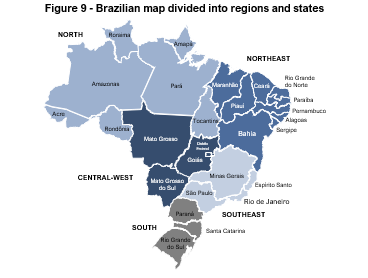
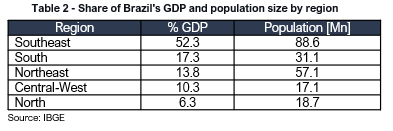
• Southeast: as the most economically developed region, business practices are more formal and fast-paced, particularly in major cities like São Paulo and Rio de Janeiro. However, even in this corporate environment, personal relationships and social networks play a crucial role in business success.
• South: the influence of European immigrants shapes the business culture here, which can be more structured and formal. Businesses are often family-owned, and there is a high value placed on tradition and local customs, which can influence negotiation styles and business partnerships.
• Northeast: this region is known for its warm and welcoming nature, which extends into business practices. Interactions are often personal and informal, with a significant emphasis on building personal connections before formal business dealings.
• Central-West: the straightforward and pragmatic approach of this region reflects its agribusiness-driven economy. Business discussions are direct and focused on practical outcomes, yet there remains a strong preference for face-to-face meetings to solidify business relationships.
• North: community-focused and sustainable practices often influence the business environment. Relationships are key, with a slower pace of negotiations that emphasizes long-term partnerships and community benefits.
Overcoming legal deadlocks
I. Litigation
In many cases, the same judge who gives a ruling on a car crash analyzes an M&A dispute.
With continental size, diverse cultural regions, and each state level having its own legislative and executive branch, it is not a surprise that there are courts nationwide with a better understanding of corporate transactions than others. Hence, choosing a court with a more sophisticated track record is crucial since it provides more legal certainty and a better chance of faster and cheaper litigation.
While negotiating an M&A transaction, and ideally from the signing of a Non-Disclosure Agreement, it is recommended to indicate a large city (e.g., São Paulo) as the city to solve legal disputes because of its expertise in corporate law with specialized judges. On the other hand, targets nationwide will be incentivized to choose local courts, particularly in their own city. This, however, can later be a problem. Not only are local courts not experts in M&A transactions, but a local judge’s possible proximity to the shareholder can influence decisions in a way that is unfavorable to the buyer.
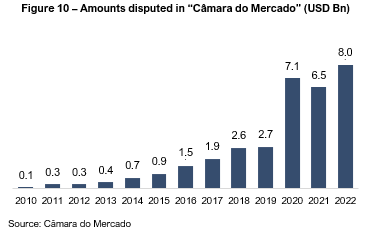
To avoid judiciary, many disputes are being settled in arbitration chambers designed to be faster and more specialized in corporate litigations. This is a growing form of conflict resolution, as demonstrated by the evolution of the total amount under dispute in just one of the existing arbitration chambers.
II. Grasping the civil responsibility system
In countries such as the U.S., the seller, by law, does not have the duty to inform the buyer of misconduct. That is why the acquirer stipulates a checklist of information he needs to obtain for the deal to close.
Conversely, Brazilian law places a duty of full disclosure on the asset owner. The practical distinction between this and other legal systems is significant: in Brazil, the seller’s obligation goes beyond merely providing the information requested in a due diligence checklist. The seller must disclose all material facts, including essential details that may not be explicitly requested. This broader duty means that indemnities are not limited to the information supplied in the due diligence process or the sale and purchase agreement (SPA).
Once the acquisition is completed, Brazilian law assigns responsibility for any contingencies to the buyer, who must then seek indemnification from the seller. This stringent disclosure requirement often results in indemnity clauses, as opposed to upfront price reductions, to account for potential liabilities. Consequently, buyers in Brazil typically address post-acquisition contingencies through indemnification mechanisms rather than price adjustments. This legal framework makes full acquisitions, known as “porteira fechada” (loosely translated as ‘closed door’), relatively rare. Hidden liabilities, particularly related to labor and tax matters, are generally managed through indemnity agreements rather than through direct reductions in the sale price.
Given that the seller is typically responsible for indemnifying the buyer, two critical factors must be considered: estimating the total potential liability and determining the buyer’s guarantees for indemnification. In order to estimate liability, buyers must conduct thorough research, often consulting court databases to identify existing civil, criminal, tax, labor, and administrative lawsuits or proceedings involving the target company or individual. Since these inquiries must be made in the relevant jurisdictions, it is best practice to search across multiple states, focusing on the asset’s location, the company’s place of incorporation, and other key regions.
Generally, there is a statute of limitation of 5 years; however, environmental liabilities, for instance, are not subject to any statute of limitation, making it necessary for the buyer to be even more careful during the due diligence process.
III. The deal structure matters
The legal structure of the acquirer and the payment scheme directly impact on the sellers’ tax amount and the buyer’s future tax bill.
Thus, choosing the most suitable structure can increase the value for both the acquirer and the seller.
For example, Brazilian tax legislation allows, in specific scenarios, the amortization of the goodwill13 paid by the acquirer, which can generate tax savings equivalent to up to 25% of the transaction value at net present value. Depending on the applicable legislation, goodwill can be amortized over time and deducted as an expense for tax purposes. In Brazil, for instance, this amortization can occur over a period of 5 to 10 years, reducing the taxable income of the acquiring company. The amortization of goodwill decreases the company’s taxable profit, resulting in tax savings over the years. Essentially, the buyer can reduce its tax burden by leveraging the amortized goodwill as a deductible expense.
By reducing taxes due to amortization, the buyer can increase the available cash flow. This is especially important in transactions where goodwill is substantial since the tax savings can be a significant source of funds for reinvestment or for paying down acquired debt.
13 Goodwill is the amount paid in excess of the fair value of the net identifiable assets of the acquired company. This value reflects factors such as brand strength, customer relationships, and other intangible assets that add value to the transaction.
IV. Legal structures for an acquisition
The two primary means of acquisition in Brazil are (i) purchasing shares or control blocks through Share Purchase Agreements (SPAs) and (ii) incorporating the target company and its shareholders.
Unlike the United States, where the corporate control market has long been active with raiders that acquire companies through hostile tender offers, Brazil’s legislation on this matter, such as defense mechanisms, is uncertain as there are few hostile takeovers. The main reason is that Brazilian corporate organizations tend to concentrate on ownership, making it difficult for hostile M&As to happen.
Not only that, but one must also be aware of the widespread use of a Brazilian version of poison pills where the buyer commonly must place an offer to buy all shareholders with an offer price that ultimately kills the transaction. An example of this mechanism can be seen in the failed acquisition of the tech company Positivo by the Chinese Lenovo.
Mitigating risks: strategies for success
I. Prioritize critical points to determine early in the process if there are any deal breakers.
Mid-sized companies in Brazil are rarely audited, and often, financial statements do not include relevant liabilities. It is advised to ask the company the right questions before entering full-fledged due diligence, as the cost of failure is quite high.
Due to complex and changing legislation in Brazil, it is not uncommon that due diligence uncovers potential contingencies or inappropriate practices in the company that the owner is not aware of.
Frequent deal breakers are companies paying the wrong (and lower) revenue tax rate, irregular labor practices, lack of proper documentation, environmental contingencies, etc.
II. Look for commercial agreements that are not at arm’s length. Frequently, they are not sustainable after the deal.
It is not uncommon to find mid-sized companies with incipient financial controls. It is also not uncommon for acquirers to focus too much on financial statements while overlooking other important strategic factors – such as weak commercial partnerships, evolving regulation, and legislation, the concentration of revenues in a few clients, to name a few –and having “unexpected” bad news after the acquisition.
Special caution is required when the target has B2B contracts that cannot be considered at arm’s length. It can be related to the owners’ personal relationships (e.g., real estate contracts) or personal connections to the hirer agent.
The risk of losing these as-is agreements is mitigated by conditioning the transaction payment upon migration to a new contract structure.
III. Consult with experts outside the due diligence team to challenge your risk assessment and synergy assumptions.
In Brazil, it is customary not to discount potential liabilities from the purchasing price. Instead, they are addressed in indemnification clauses, and the risk perception of their materialization plays a significant role in the negotiation of final contracts.
Due to Brazil’s large, ever-changing, and complex legislation, relevant estimates of materialization may be incorrectly assessed through the due diligence of a generalist team. Even experts may have conflicting views on some potential liabilities.
This may seem overzealous, but it is important to consult seasoned professionals and double-check assessments for some specific and relevant potential liabilities.
IV. Be creative to bridge expectations between acquirer and seller.
Vendor financing is quite common due to Brazil’s high capital cost. Since the nominal value of a transaction (important to the seller) and the NPV of the payment structure (important to the bidder) can differ quite widely, deferred payment is a powerful tool to bridge value expectations.
Tax liabilities are common in smaller deals and are sometimes quite sizable compared to the total transaction size. In Brazil, the acquirer is legally bound to the target company’s liability for past tax obligations (typically with a five-year statute of limitation), so it is crucial to structure a deal that protects the acquirer while remaining interesting for the seller. For buyers’ benefit, holdback structures (which are tied to deferred payment structures) are sometimes negotiated instead of escrow accounts.
Furthermore, earnout structures, wherein the purchase price is contingent on the “future performance” of the target company, are tempting to use but should be considered carefully. They might seem like a great idea at the negotiation table but could generate wrong incentives and/or serious discord afterward. This is mainly because of the possible litigation over the lack of clarity regarding what the parties consider satisfactory performance or other valuation metrics that trigger the earnout. Thus, since dispute resolutions in Brazil, either via the judiciary system or arbitration, are costly and time-consuming, using earnouts can be detrimental and value-destroying to the buyer.
V. Apply the required adjustments to the target’s financials before indicating a price.
Presenting a non-binding offer based on sellers’ unadjusted accounting or managerial figures can be tricky. Quite often, they do not reflect the reality of the underlying business, and consequently, there is a high likelihood that the initial valuation is off the mark. This is particularly relevant in mid-sized companies, demanding special attention from the buyer.
In that sense, some common and easily identifiable missteps happen in Brazilian companies, such as paying compensation for employees as dividends; not reporting all revenues and expenses to avoid taxation, which can both overstate or understate the profitability; use of the company to pay for shareholder’s personal expenses, and other schemes.
Identifying and making these adjustments is of the utmost importance. If the offering price is higher than the fair value, reducing it after due diligence causes friction with the seller, who could even walk away after the acquirer has already incurred due diligence costs. If the offering price is lower, the acquirer may not be invited for due diligence in a situation where it would be willing to pay more if it had the correct information.
Maneuvering the regulatory landscape
I. Regulatory Agencies
Depending on the nature of the economic activity developed by the target company, distinct government agencies interact with the company and the transactions. For example, acquiring control of a company that holds the right to explore the energy generation capacity of a dam requires previous authorization from ANEEL14, the Brazilian electric energy regulator. These agencies can issue regulations, overwatch the market, and persecute wrongdoers. Moreover, Brazil has developed institutional arrangements that allow its agencies to exercise their competence with a satisfactory degree of autonomy.
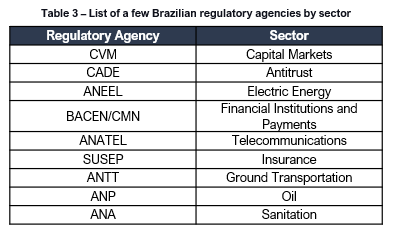
Much like every other country, Brazil has a Securities and Exchange Commission (“Comissão de Valores Mobiliários” – CVM”), regulating publicly held corporations and stock market activities. One must observe several normative directives to become a publicly traded firm and negotiate M&As between public corporations. For instance, Brazil has no “creeping acquisitions” (acquiring a company through the gradual purchase of its shares) since a disclosure rule demands the buyer to inform the market of its current position as soon as one holds 5% of the company’s stocks.
It is also of the utmost importance to analyze whether foreigners can invest in the target sector, as there are limitations depending on the nature of the activity. Until recently, several sectors, such as healthcare, telecommunications, and airlines, had restrictions on foreign ownership. Legislation has evolved, but a few sectors with some restrictions remain, such as nuclear energy and rural properties.
Existing limitations on rural assets are particularly relevant given the well-known opportunities to explore Brazilian agribusiness and natural resources. Brazil’s law prohibits foreigners from buying rural land of large sizes except when directly authorized by the National Congress. Attempts to bypass this restriction can result in several risks, including undoing the transaction.
The case of J&F against its fellow shareholder, Paper Excellence, over the purchase of control of Eldorado Brasil, one of the largest pulp & paper producers in the country and a company that controls several rural properties, precisely illustrates this point. In 2017, J&F sold Eldorado Brasil to the Indonesian company Paper Excellence. However, several discussions after the deal’s signing led to the beginning of a long judicial battle between the buyer and the seller, with the seller regrating the sale and trying to avoid closing the transaction. Amid the litigation, it was claimed that the transaction had violet federal law since Paper Excellence did not request either congressional or Incra´s authorization (“Instituto Nacional de Colonização e Reforma Agrária”) to buy rural land that is property of Eldorado Brasil.
In light of this, Incra and the State’s Prosecution Office positioned themselves against the transaction, claiming it was void. In response, the judiciary power suspended the transaction until the matter was properly investigated.
Despite this restriction, there are legal mechanisms to circumvent this problem with some creative deal structuring. For instance, when one of the largest commodities traders in the world acquired grain warehouses in the Brazilian countryside to cope with the growing demand for corn and soybeans, it structured the transaction as an asset purchase of buildings and equipment, coupled with a 99-year term lease of the land, thus reducing the risk of having the transaction rejected.
14 ANEEL acronym for National Agency for Electric Energy
II. Antitrust laws
There is one agency that can prove itself to be a “deal breaker” – the Brazilian antitrust authority (CADE15). Fortunately, CADE has historically approved the vast majority of M&A proposals – from its establishment in 1994 until 2018, only 0.21% of the transactions were rejected16. By law, the proposed transaction is required to be submitted to CADE when: (i) one of the parties involved in the transaction has a gross revenue in Brazil equal to or bigger than BRL 750 Mn (~USD 136 Mn) and (ii) the other party involved in the transaction presents a gross revenue equal or bigger than BRL 75 Mn (~USD 14 Mn)17.
CADE assesses whether the deal constitutes a control acquisition based on the financial threshold. In such cases, the parties are required to wait for CADE’s authorization. However, it is important to note that not only control acquisitions need CADE’s approval.
The threshold that triggers CADE’s analysis depends on the target’s economic sector. Acquisitions of 20% or more of the target’s shares if the firm’s activities are unrelated to the buyer’s market (i.e., they are not a competitor or present in the same vertical chain) call for governmental approval. It is worth noting that if the company is a competitor, even buying 5% or more shares automatically triggers the agency’s need to analyze the transaction.
Any deal that satisfies these criteria relies on the antitrust authority’s approval for closing. Disobeying this can result in a heavy fine, a serious consequence that emphasizes the importance of adhering to CADE’s regulations. For instance, Govesa Motor Veículos and Kuruma Veículos were sanctioned with fines of up to 20% of the transaction value for not waiting for CADE’s authorization to conclude the deal.
Failure to get CADE´s approval can undoubtedly result in financial losses. In light of this, the parties can insert a break-up fee clause to protect themselves from the costs and resources dedicated to the M&A negotiation.
The case of Suzano and Fibria illustrates this situation. In 2018, Suzano bought Fibria for USD 16 Bn. During the transaction, the parties had foreseen the regulatory risk of CADE denying the acquisition since the M&A would create a company that concentrated 16% of the global production of cellulose. Therefore, the SPA contained a break-up fee clause of BRL 750 Mn (~USD 136 Mn).
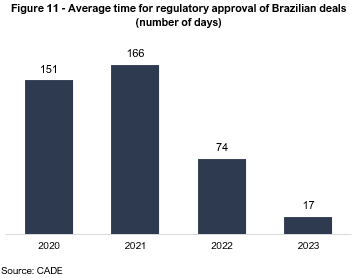
Albeit each transaction is unique and may differ from one another in complexity, CADE has established a “fast pass” for the approval procedures if the transaction has a lower potential for damaging competition. Several situations are listed in the agency’s normative instruments, foreseeing when the fast pass procedure can be applied. In those cases, the agency has 30 days to analyze the requests for mergers and acquisitions, unlike the standard procedure that can last 240 days.
In 2023, CADE analyzed 611 transactions. Of those, 92% were reviewed by the authorities’ “fast pass” procedure. A review of transactions filled via the fast pass procedure was completed in 12.6 days on average, compared to 116 days of those filled through the regular proceeding. Later that same year, CADE announced the e-Notifica System, which created an online process for filing transactions with the agency. The system and the improvement in the time taken to analyze the transactions indicate that the authority has been able to and continues to look for ways to improve efficiency.
16 BORGES, Rodrigo. Descontrole de estruturas: dos objetivos do antitruste às desigualdades econômicas (2020)
17 Conversion made considering a commercial exchange rate of 5.50 BRL/USD
Case stories: learning from successful acquisitions
This chapter explores successful Brazilian M&A cases, providing rich insights into the strategies that led to triumphs in these transactions. By examining a diverse array of industries – from retail to health insurance – this analysis explores key lessons learned from each case, with valuable guidance for navigating the turbulent waters of M&A.
Case 1: Pepkor acquires Lojas Avenida as a move to expand geographically
Pepkor, headquartered in South Africa, is a prominent retail conglomerate known for its noteworthy influence in the discount and value retail sector. Established in 1965, the company strategically focuses on the lower living standard measure (LSM) market, and it was valued at USD 5.4 Bn by the time of the acquisition of Grupo Avenida.
Conversely, Grupo Avenida is a leading retail chain in Brazil, specializing in fashion apparel and accessories. Founded in 1978, the company has become one of the country’s largest fashion retailers in the central-western region, focusing on products for people with lower purchasing power.
In 2022, Pepkor expanded its international footprint by acquiring 87% of Lojas Avenida shares for USD 208 Mn.
The strategic move marked Pepkor’s ambitious entry into the Latin American market, significantly broadening its global presence. With a previous desire to expand its brand positioning and core values, the buyer focused on a market of over 200 million inhabitants and with 4x South Africa’s GDP—a great target.
Avenida was previously owned by Kinea, one of the leading private equity companies in Brazil, and by the founding family. Both seller groups understand that the transaction was perfect in timing. After a failed IPO attempt in 2021, the group needed an investor to provide financial strength to perform its plan to open 170 new stores. Also, the Brazilian retailer could benefit from its new owner’s access to Asian suppliers.
Both sides considered the deal successful. Pepkor announced that it would speed up the expansion of Lojas Avenida, aiming to open 50 stores per year. In December 2023, the buyer reported an increase of 8.5% in Avenidas’s store sales, higher than the rest of the group.
Key success factor in this acquisition: Pepkor pushed Avenida’s value creation plan forward by removing unprofitable product categories, converting stores to Avenida formats, and enhancing competitive positioning with a discount strategy that increased volumes.
Case 2: Bupa acquired Care Plus, aiming to enter a highly regulated market internationally
In 2017, Bupa, a leading international healthcare group, acquired Care Plus, a Brazilian health insurance company known for its premium services in the corporate segment. At the time of the deal, the target had approximately 90,000 registered beneficiaries with a revenue of USD 238 Mn by the end of 2017.
This acquisition significantly strengthened Bupa’s presence in Latin America, particularly Brazil. The buyer’s goal with the deal was to broaden its global reach and engage in key emerging markets, expecting to increase revenues and clients by over 20% and bring new coverage services focused on the high-end corporate public.
Moreover, the inorganic expansion was the right decision since the health insurance market in Brazil is highly regulated by the National Health Agency (ANS). It plays a crucial role in overseeing and enforcing regulations to ensure that providers comply with strict guidelines related to service quality, financial stability, consumer protection, and transparency. The regulatory framework requires a deep knowledge and understanding, which Care Plus’s team covered.
In retrospect, the deal was successful – with the target fully integrated into Bupa’s platform. The Care Plus unit achieved revenues of USD 432 Mn by the end of 2023, representing a +80% growth since the acquisition.
On the other hand, another M&A in this segment was not successful. United Health Group acquired Amil for USD 5.3 Bn in 2012. However, the Brazilian company was experiencing a turbulent period, intensified by the COVID-19 pandemic. In 2022, the controlling shareholder decided to interrupt the individual plans portfolio, but ANS prohibited this measure. Therefore, the Group has chosen to sell the Brazilian operation for USD 2.2 Bn, representing almost a 50% loss.
The example above emphasizes how deep knowledge of regulations and institutions is indispensable in the health market, boosting the M&A market. Beyond that, adaptation to the new region is essential, which could be sustained by a well-drawn post-merger integration plan.
Key success factor in this acquisition: Bupa identified a well-managed target in a prime regional market. The timing was also crucial, as Bupa avoided entering a heated market by quickly executing the deal once the target was identified.
Case 3: Heineken acquired Schincariol, becoming the second-largest player in Brazil
Brasil Kirin, Schin beer producer, was fully acquired by Heineken in 2017 for BRL 2.2 Bn (USD 707.1 MM). The deal included 12 industries, the supply chain, business operations, and sales.
It was the second time Heineken tried to acquire the company. In 2011, it was one of the bidders to acquire Schincariol. However, the Japanese brand Kirin had a higher offer. During the second process, the founders tried to re-buy the company but could not raise enough capital.
Heineken was already operating in Brazil with Heineken, Amstel, Dos Equis, Birra Moretti, Kaiser, and Bavaria. The Dutch brewery had two motives for pursuing the acquisition: (i) to expand its operation to Brazilian northern and northwestern regions, which it had a low penetration, and (ii) to expand its portfolio with new premium and rival brands – Schin, Devassa, Baden Baden and Eisenbahn.
AB InBev, its largest worldwide competitor, had just acquired SABMiller. Heineken took the opportunity as an advantage to expose its strength and condition to face the global market, including the “Ambev home country.”
In an interview, the CEO at that time said, “Brazil is not for amateurs, especially when foreigners look at the business environment, which includes bureaucracy and concerns about tax and legal framework.” The acquisition was structured to expand and diversify the Company’s portfolio in a growing country.
As a result, with the acquisition, Heineken doubled its operation in Brazil, becoming the second-largest brewery in the country with 20% of the market share. Also, after the acquisition, Brazil became the largest region inside Heineken.
Key success factor in this acquisition: Heineken demonstrated discipline by not overpaying, gaining deeper market knowledge, and having a clear strategy. Their patience allowed them to enter the market at the right time and expand with the best assets.