The journey of going public has numerous challenges. When it is not successful, several questions arise: Why was the company unable to go public? Didn’t investors like the investment thesis? Were they afraid of any relevant risk? Didn't they trust the management? Did they think the company was not worth what was being asked?
Among the companies that did not complete the process between 2011 and 2021, 86% did not attempt a second listing. On the other hand, among the companies that did, only two were unsuccessful (of which one did not try for a third time, and the other managed to list in the only case of three IPO attempts since 2011).
The Initial Public Offering (IPO) is the process in which a company starts having shares traded on stock exchanges. It is a transformational event, which impacts several internal areas of the company, as well as its relationships with external stakeholders: banks, suppliers, customers, shareholders, among others.
The IPO allows the Company to raise funds to meet its investment needs and allows its shareholders to sell their shares to the market. An additional benefit is that public companies generally have greater access to funding sources than private companies. This is because these companies are required to have a high level of professionalism, a formalized governance structure, in addition to providing transparency to their business and providing standardized financial information verified by an external audit. Several institutional investors, such as some pension funds, for example, have regulatory restrictions on investing in companies that do not meet these prerequisites. With this access to a greater number of investors, the company has easier access to capital, either through subsequent rounds of share issues (follow-ons) or through the easier issuance of debt instruments.
Additionally, listed companies have more favorable positions in mergers and acquisitions processes, since they have the alternative of making payments using their shares, which, as they are traded on the stock exchange, are better accepted as a trading currency. The IPO may also generate greater employee engagement through the creation of a share-based compensation program and increase the Company's visibility for talent acquisition and retention, in addition to strengthening the company's brand.
On the other hand, public companies need a robust management structure to face regulatory and capital market demands. In addition, market externalities and moments of high volatility, for example, can significantly impact the value of companies' shares, regardless of their financial and/or operational performance. Its managers need to know how to navigate these situations, making business decisions based on fundamentals and not on market perceptions, as well as being prepared to respond to questions from the financial market.
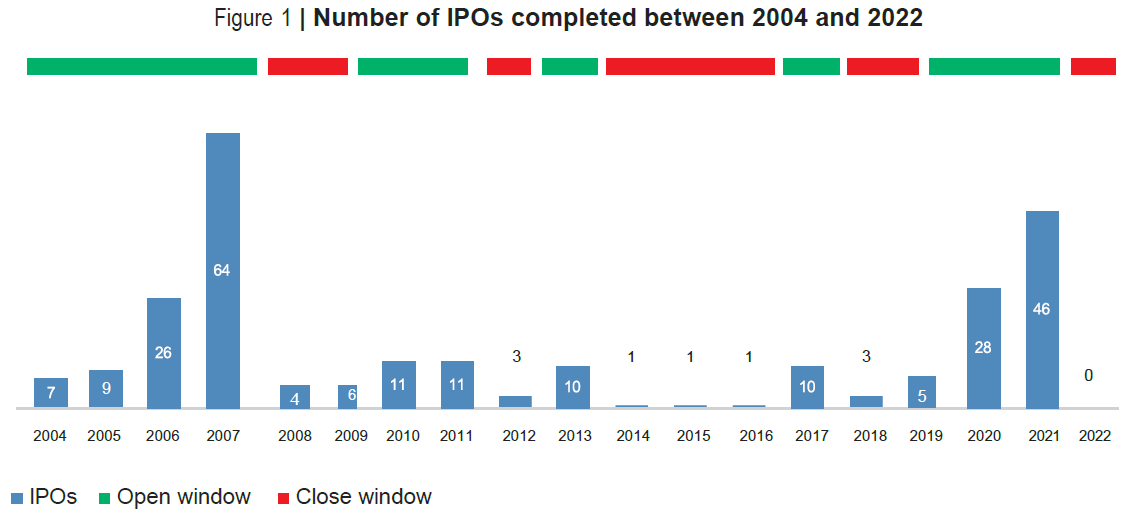
One of the main challenges in carrying out an IPO is timing. As shown in Figure 1, the stock market is characterized by favorable and unfavorable periods (windows) for equity issues, marked by changes in investor’s appetite for variable income assets. Macroeconomic factors, such as significant changes in interest rates, the country's growth prospects, political situations, among others, determine the opening and closing of these windows, which can last from a few months to years. The volatility and unpredictability of windows end up making some offers unfeasible.
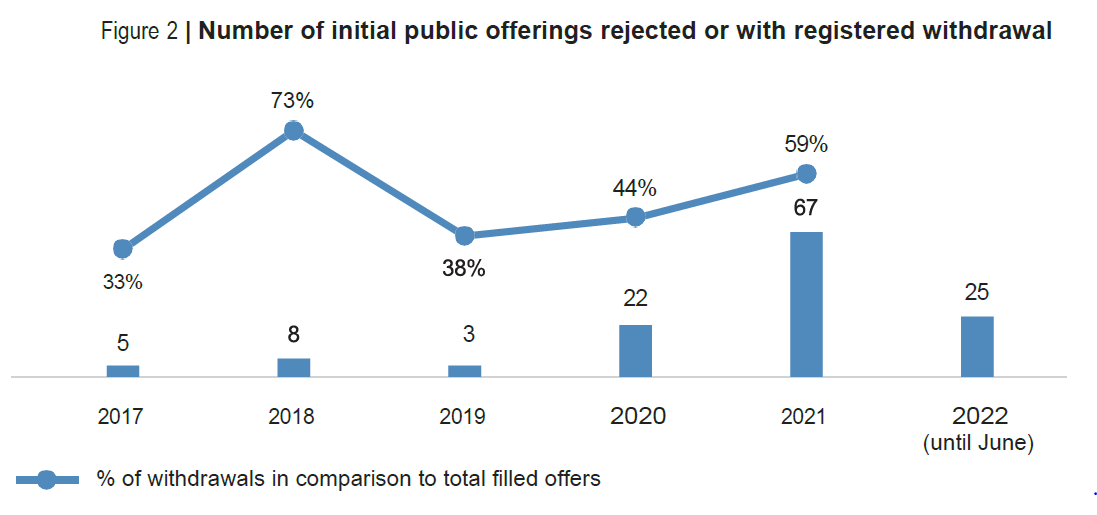
A period of increased investor’s appetite, i.e., “an open window”¹, does not necessarily guarantee the conclusion of an IPO. Between 2017 and 2021, several companies that started an IPO process were unable to complete the IPO (Figure 2).
Understanding where other companies have struggled, or even failed, can be very helpful for companies considering a bid. The process has fixed expenses that usually range between BRL 3 million and BRL 10 million (~1.0% of the offer value, according to the average of offers carried out between 2004 and 2021), in addition to the fee to be paid to banks in case of success (further explained later in the Practical Guide to Syndicate Formation). Practical Guide to Syndicate Formation).
It is important to highlight that the IPO must be seen as a mean to access the capital market and obtain the benefits of a public company, and not an end itself. The process begins long before the formal offer is made and must continue long after it is made.
1 Open window in Brazil characterized by a year with 7 or more offers and closed with 6 or less offers.
Executive Summary
This study shares information and lessons learned from 30 companies that have already gone through the IPO process. Its purpose is to help entrepreneurs who want to go public with their company and to gain greater knowledge about the main challenges of the process, and thus be better prepared, increasing the probability of success of the offer.
The interview questions were divided into three stages of a company's IPO trajectory: (i) pre-IPO strategic considerations and motivation; (ii) preparation and execution of the IPO; and (iii) after the completion of the IPO. The main conclusions were:
Pre-IPO strategic considerations and motivation:
67% of the interviewed companies considered alternatives for raising funds in addition to the IPO, the main one being funding via private equity funds (95%);
70% of the interviewed companies made some pre-IPO strategic move. The most common of these was investment by private equity funds;
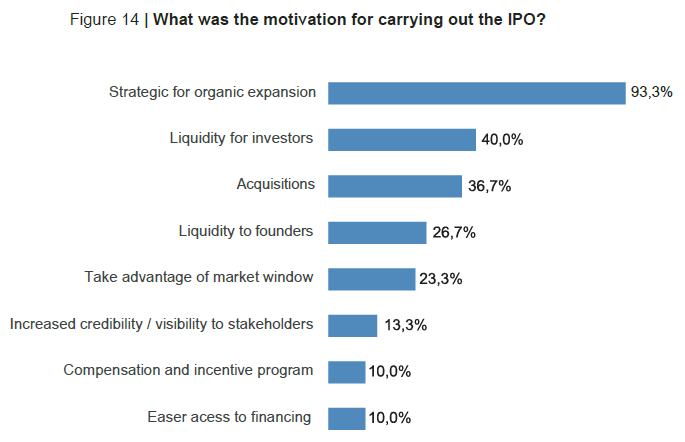
The most cited motivations for carrying out an IPO were raising funds to finance an expansion strategy (93%) and guaranteeing liquidity for shareholders (40%).
Preparation and execution of the IPO:
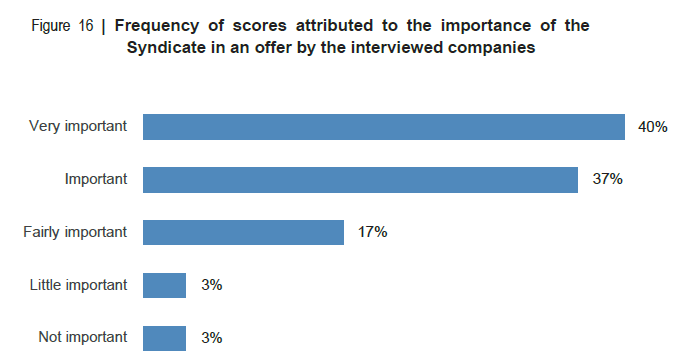
The Banking Syndicate was considered important or very important in the process by 77% of respondents;
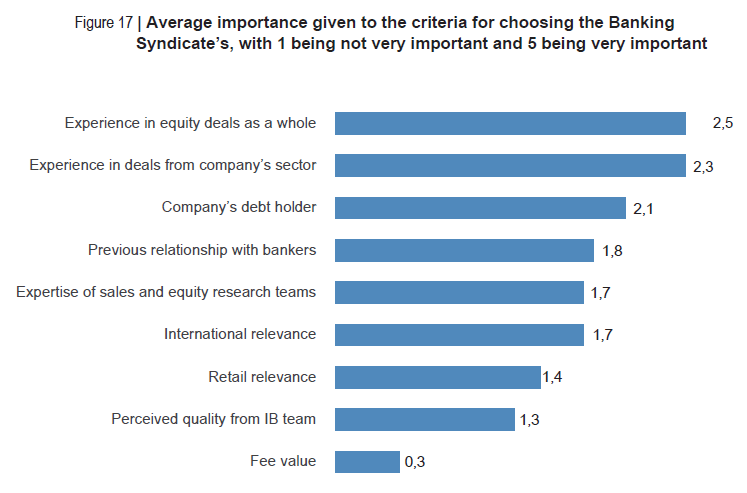
The highest scored² criteria for choosing the Syndicate's banks were the bank's experience in equity deals as a whole (grade 2.5) and in industry deals (grade 2.3), surpassing the previous relationship with the company as creditors (note 2.1);
The greatest difficulty faced by companies not invested by private equity funds regarding the preparation of necessary documentation was collecting financial/accounting information in the short term (82% of cases). A much smaller percentage among the companies that had been invested by these funds reported facing this difficulty (23%);
The governance challenges most cited by respondents were improving internal controls and composing a qualified board of directors.
After the completion of the IPO:
With few exceptions, respondents (92%) felt that the IPO was a beneficial decision for the company;
The most cited benefits of the IPO were access to capital, brand strength and attracting and retaining talent;
The most cited negative point was the sensitivity of stock prices to market variations;
Understanding the importance of prior preparation for the IPO was the most cited learning from the process;
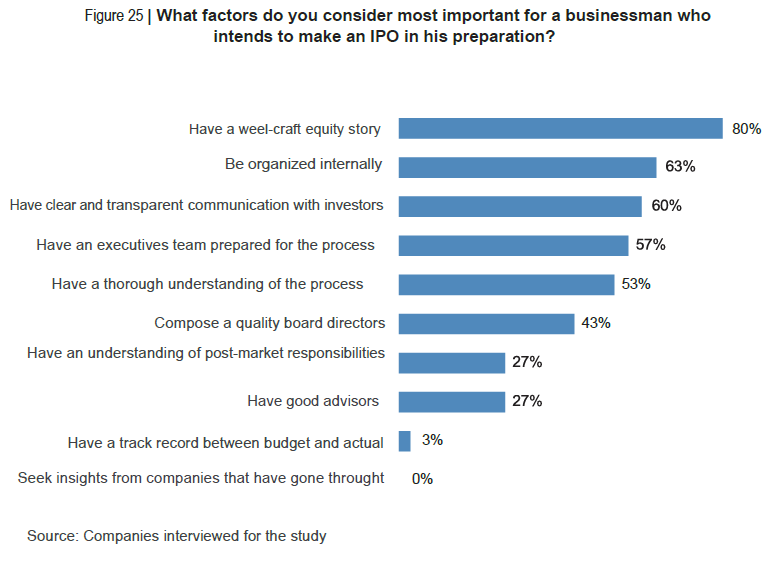
80% of companies recognized that having a well-crafted storytelling could have facilitated the process;
When questioned about what the main learning in the process was, the importance of previous preparation was mentioned by approximately 77% of the interviewees and, if they could go back, about a third of the companies declared that they would have invested more time with this organization, followed by better window timing management;
The main factor cited by founders and entrepreneurs for generating shareholder value in the post-IPO was having a financial performance in line with projections (80%).
Sample Description
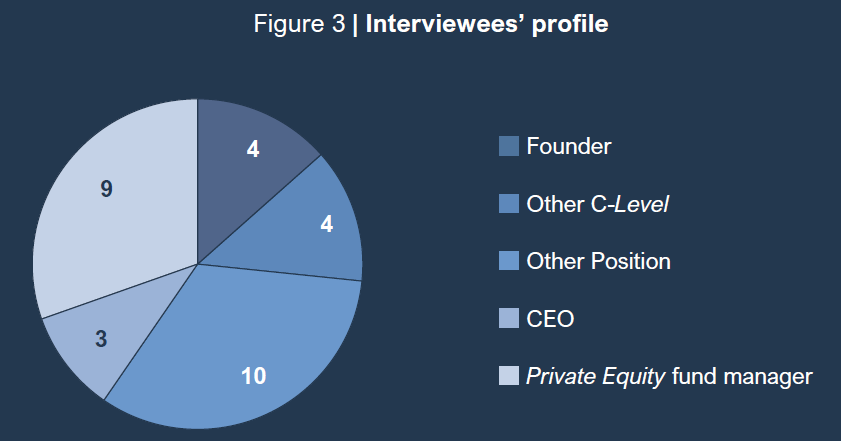
To craft this study, 30 entrepreneurs and executives (C-Level) of companies that went through the IPO process between 2018 and 2021 were interviewed (Figure 3).
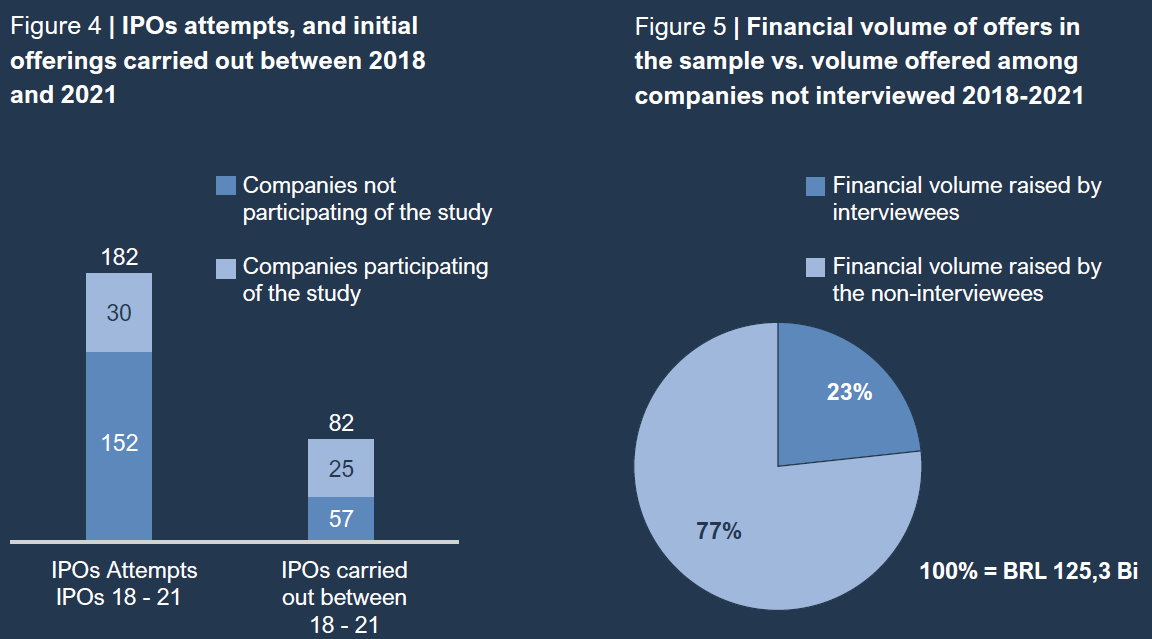
Of the 30 companies interviewed, 5 did not complete the IPO process. This is equivalent to 16.7% of the sample, that is, approximately half of the 37.5% rate of companies that registered the process between 2018 and 2021 with the securities commission and did not complete it (Figure 4).
The 25 respondents who completed the process represent 30% of the 82 IPOs that took place between 2018 and 2021 and moved a total of BRL 29.6 billion in their offerings, with values ranging from BRL 300 MM to BRL 3 billion. This value corresponds to 23% of the financial volume raised in the period through initial public offerings (Figure 5).
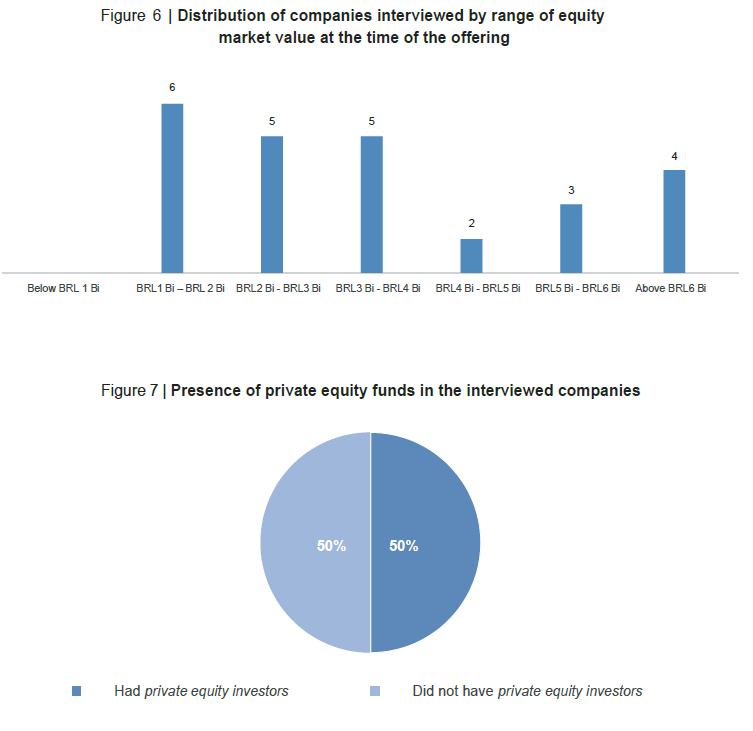
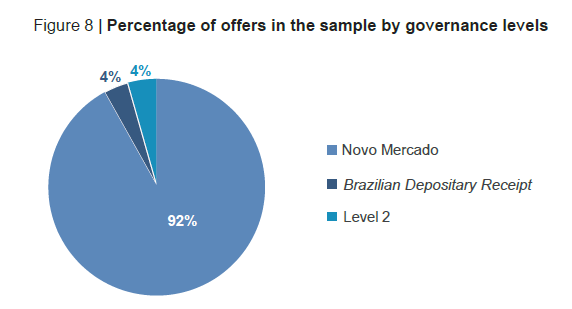
Among the companies participating in the study that completed the IPO process, 6 had a market value of less than BRL 2 billion at the time of issuing shares (Figure 6), 50% had private equity funds among shareholders (Figure 7) and the vast majority (92%) were listed on the Novo Mercado – a listing segment for companies that are committed to the highest standards of corporate governance required by B3 (Figure 8).
The three sectors with the highest representation in the sample were Information Technology (30% of the interviewees), Health (13%) and Construction and Services (10% each). These were also the sectors with the highest number of IPOs registered with the securities commission in the same period (18% Information Technology, 12% Health and 12% Construction and Services. (Figure 9).
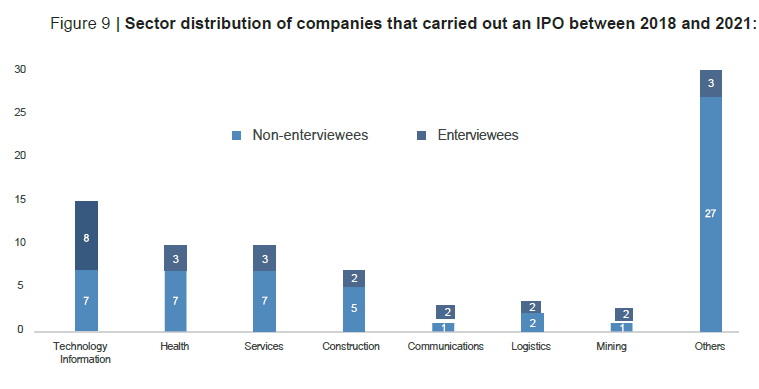
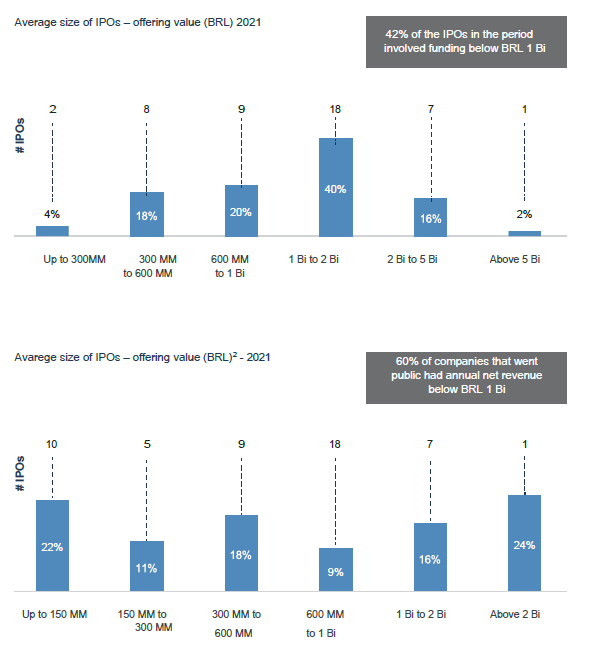
Offers in the Information Technology sector had an average size of BRL 1 billion, that is, they were in the smallest size range. Technology companies, in general, project a strong growth curve and, therefore, investors are more receptive to smaller offers in this sector. The expectation of high growth and, consequently, greater return on investment, allow investors to participate in offerings and carry out smaller purchases than usual. Smaller offerings like these are recent in Brazil. In 2021, around 20% of the IPOs carried out in Brazil were offerings of less than BRL 600 million, and approximately one third of the companies that carried out the listing had net revenues of less than BRL 300 million.
2 Net income for the 4 quarters prior to the offering.
STRATEGIC CONSIDERATIONS AND MOTIVATION
Strategic Alternatives to the IPO
An unsuccessful offer registration, that is, one that does not result in a listing, can result in, in addition to the wear and tear of the process, a considerable increase in costs linked to the governance structure and audit. The company will also make information about its operation and strategy public, without obtaining the benefit of accessing the capital market.
For these reasons, the question of whether or not to initiate the IPO process is something that permeates the lives of many companies. As much as there are numerous benefits of having your shares traded on the stock exchange, the challenges linked to this are also relevant. However, if the company is not comfortable with the decision to go public, there are other alternative options to finance its growth or address the interests of its shareholders.
"The biggest challenge of the whole process was making sure the listing was the right path to go.”
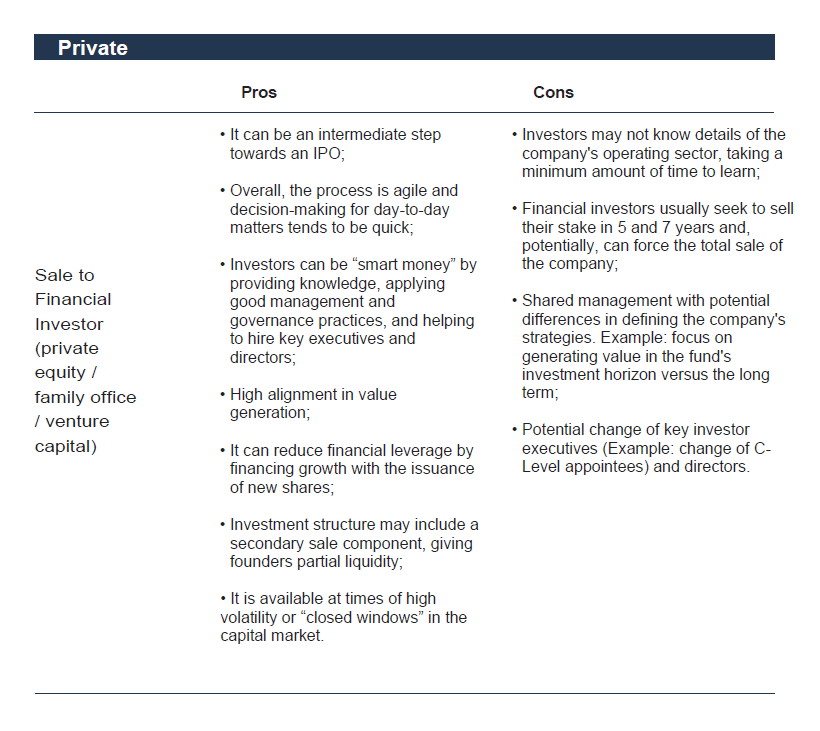
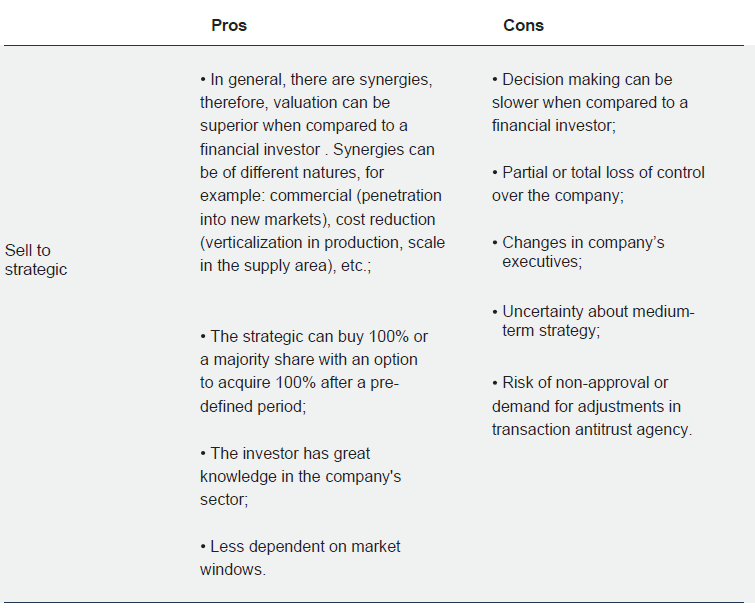
As IPO windows are very volatile, it is difficult to predict whether the capital market will be favorable at the exact moment when an IPO is priced. Therefore, it may be advised to have a Plan B and access other sources of capital. To maintain this optionality, many companies pursue a dual or multitrack process (example: while the company executes its IPO, it continues to discuss financing alternatives with debt and/or private equity funds and/or selling to strategics simultaneously). Chart 1 compares the alternatives for obtaining resources and liquidity for shareholders.
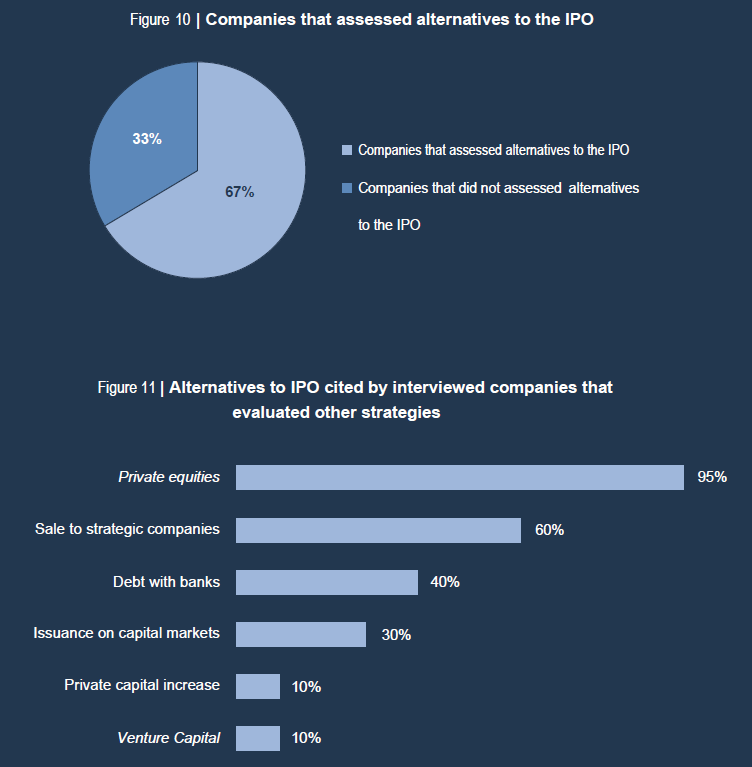
Among those interviewed, 67% considered alternative fundraising alternatives to the IPO, the most cited being a funding round with private equity funds (95%), followed by a sale (partial or total) to strategic companies (60%). borrowing from banks (40%) and issuance on capital markets (30%).
One-third of respondents (33%) did not consider alternatives to the IPO (Figure 10). When companies are segmented by size, this percentage is higher among larger companies (more than BRL 2 billion in market capitalization – market cap). Among larger companies, 38% did not evaluate any other strategy versus 20% among smaller companies.
"We started the process as a Dual Track. The IPO was already the first option, however, the sale of company's stake to a fund or strategic investor was an option.”
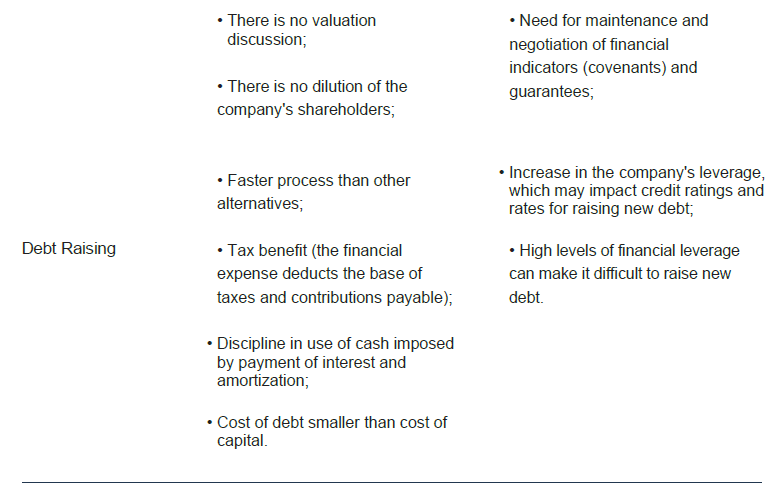
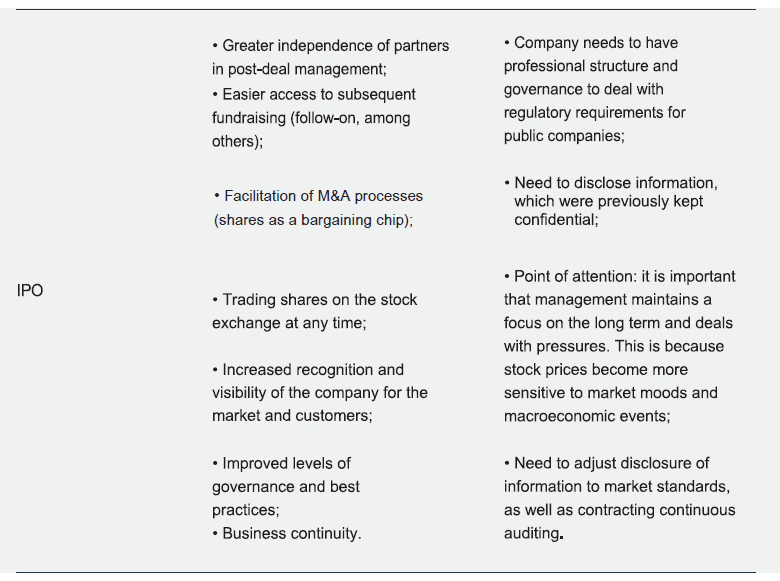
Source: Prepared by the authors
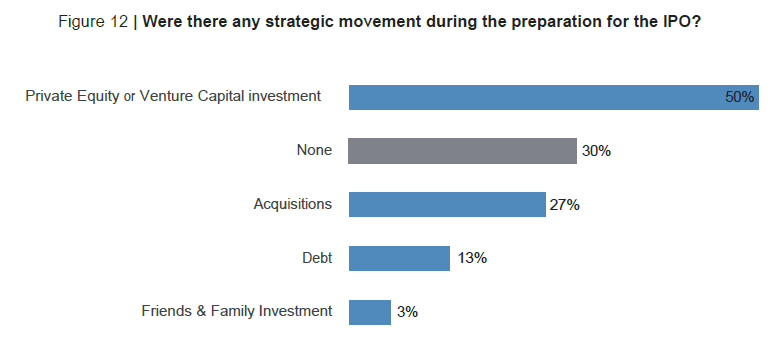
Of the interviewed companies, 70% raised financial resources and/or provided partial liquidity to shareholders through one of these strategic paths before the IPO. Around half of the companies (50%) received private equity or venture capital investments, and 13% raised debt (Figure 12).
Source: Companies interviewed for the study
Definition of the use of proceeds
A share offering can be primary, in which new shares are issued, and the money raised goes to the company's cash balance, or secondary, in which current shareholders sell their shares to the new ones, and the money circulates among the partners, promoting liquidity.
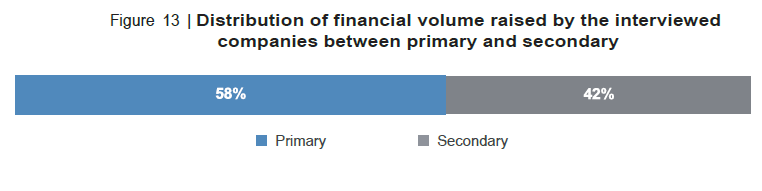
Of the BRL 29.6 billion raised among the interviewed companies, 58% corresponded to primary capital and 42% to secondary capital. There were 10 cases of exclusively primary offer and only one case of exclusively secondary offer among respondents (Figure 13).
All companies interviewed cited raising primary funds for growth as one of the main drivers for the IPO. Shareholder liquidity – secondary offering – was cited by 40% of companies.
A smaller percentage of respondents stated that they were motivated by the indirect benefits generated by the IPO: increased credibility / visibility (13%), ease of access to capital (10%) and incentive programs (10%). Taking advantage of the opening of the market window was a motivation often mentioned by 23% of respondents (Figure 14).
Go no-Go
After considering all the alternatives, if the IPO is indeed viable and seen as the best option by the shareholders, the company should begin its preparation for the process.
PREPARATION AND EXECUTION OF THE IPO
The journey from a private company to a listed entity often involves a major shift in processes, culture and, in some cases, even the companies’ organizational and people structures. Companies that prepare in advance for market and regulatory needs of public companies tend to gain more autonomy and flexibility to decide when to enter the market and have a smoother process in their IPO, whether in times of “wide” market windows.” or “tighter” windows.
The Preparation Process
"If I had known that we had to fill out so many documents, I would have prepared earlier.”
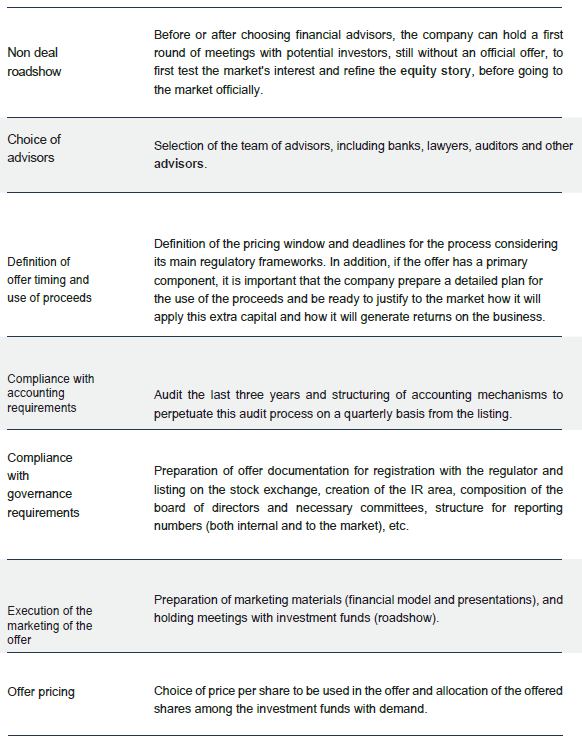
The typical IPO process can take up to two years (varying according to the company's level of preparation and the market situation), separated into the following phases:
Construction of an equity story and a business plan
“We had an organized company, but we did things our way. For the IPO, we have to speak the “language” of the market, follow the indicators they follow and everything else.”
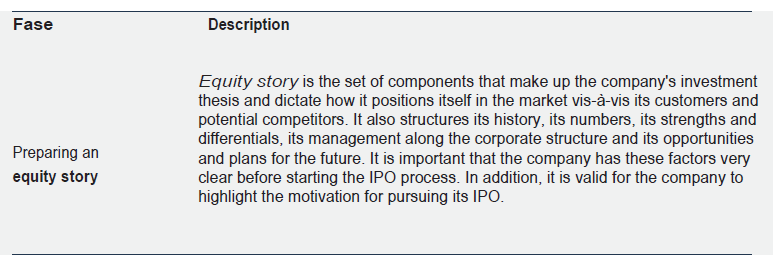
For an IPO to have enough demand to move forward, the company must arouse investors’ interest and convey confidence that the allocated capital will contribute to the company's growth and, consequently, provide gains from the investment. It is important that an investment thesis is presented to those interested in the offer. This thesis is commonly described in the financial market as an equity story.
The equity story tells the company's story, highlighting its strengths, competitive advantages, main achievements in its history, qualifications of the executive team and shareholders, main growth avenues, identified opportunities, among several other topics.
It is not only told in written presentations and meetings with investors, but also supported by the company's financial projections. It is important to emphasize the need to be careful when disclosing them (including avoiding the inclusion of these projections in materials distributed to the market), which must always be very well grounded, since they can anchor the market's expectations about its performance. The IPO is usually a lever to finance growth, so it is important to align the capital needs of the business plan with the proceeds from the offering. The investor needs to understand how the money raised will be allocated and what the expected result of this investment will be in detail.
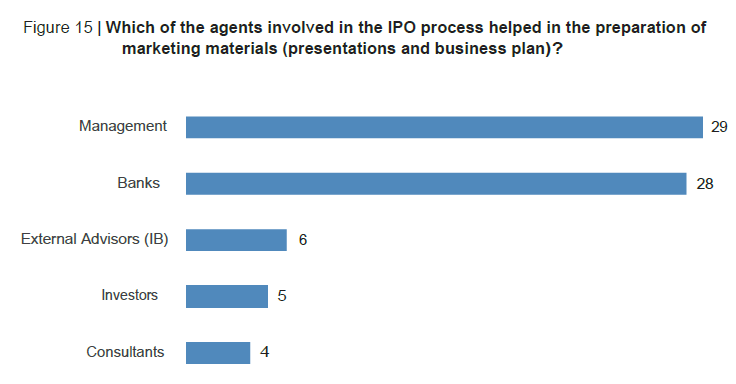
These marketing materials are normally prepared and defended to investors by company executives, in conjunction with its shareholders and financial advisors. The latter, generally, are composed only by the banks hired as coordinators of the offer. It is common, however, to have the participation of external advisors to the Syndicate to help the company with an outside view of the process.
Choice of Advisers
To carry out a share offering, it is necessary to involve several agents, including investment banks, national and international law firms, auditors, B3 or international stock exchanges (in the case of international offerings), securities and exchange commission, among others.
Investment Banks Syndicate Assist in preparing marketing materials that communicate the company's equity story and business plan to the market in the best possible way.
Structure the offer and execute the marketing and distribution of assets, also scheduling and managing roadshow meetings with investors.
Legal Consultants: Advise, in regulatory and risk aspects, on the disclouse of advertising materials, In most cases, it is necessary to hire four law firms (one national and one international for the company, and one national and one international for the Banking Syndicate).
Prepare the documents required for the offer.
Accounting Auditor: Audit all company's historical information for the offering documents, respecting the legislation and best accounting practices.
External Financial Advisors: Act in all phases of the IPO, helping, mainly, in the preparation of the company.
Participate in the preparation of marketing materials and develop the detailed financial model with deep knowledge of the business based on the assumptions of the company's main executives and shareholders - the financial model includes all the strategic initiatives that the company will implement after the IPO.
In addition, they perfom an independent advisory role for the company's shareholders and executives.
Outside advisors are not mandatory for the IPO, but they can be of great value to the company and its shareholders.
In addition to the consultants listed above, it may also be relevant to have the following advisors:
- Accounting advisor for specific matters (IFRS, BRGAAP, tax issues, etc.);
- Strategic consultancy for industry KPI analysis and comparisons with market benchmarks, operationrisk analysis and construction of a convincing equity story communication.
Every public offering must be carried out by a financial institution authorized to act in the distribution of securities. Generally, the leading coordinating bank works together with other institutions to form a syndicate chosen by the company, with a well-defined division of tasks between the institutions.
The Banking Syndicate is fundamental for the completion and carry-out of the IPO. In addition to conducting the offering and intermediating the agents mentioned above, it is responsible for determining, together with the company, the characteristics of the IPO. These definitions include the volume of fundraising, the composition of the offer between primary and secondary, the choice of the adequate moment to go on the market, the valuation of the company together with the definition of the price range for the share, the creation of the offer's marketing, access and approach investors for carrying out bookbulding, pricing and allocation of shares among interested investors, distribution, among others.
In the allocation, it is also important to highlight the role of the bank in showing the profiles of the funds to the shareholders, indicating which are short-term investors (hedge funds , important for the stock to have liquidity) and long-term investors (long-only investors aligned to the company's strategy and less likely to sell the stock quickly). It is not surprising, therefore, that 40 % of those interviewed gave the highest score to the importance of the Syndicate for the success of the transaction (Figure 16).
“We felt a lack of support and guidance from the Syndicate, we did not know all the steps of the offer and backups of the documents were requested shortly before the filing deadline.”
Source: Companies interviewed for the study
The Syndicate composition is essential for the IPO process to be well structured and aligned with the company's interests. Syndicate are formed, on average, by three or four banks, however, it is not difficult to see Syndicates composed of up to seven institutions.
“We heard more than 10 banks to choose the Syndicate and we didn't have a certain number of banks that would be part of it. If it made sense and could contribute differently to others, we could consider putting it in the offer.”
The choice of banks that will be part of the Syndicate includes several factors, such as the company's previous relationship with the bank, the presence of a financial instrument in effect at the bank, the shareholder's relationship with the banker, the bank's experience in the company's sector of activity and its positioning in the equities market in Brazil and internationally, distribution capacity inside and outside the country, among others. All these factors were mentioned significantly by the interviewees (Figure 17).
“Our main criteria for choosing the Syndicate was commercial. We gave preference to banks that were old partners, mainly related to the credit exposure with the company and that had supported our growth over the years. Looking at the profile, we only wanted three banks in the Syndicate and ended up opting for a strong retail bank, an institutional bank, and an international bank to assist with distribution outside Brazil.”
Some of those interviewed defined the experience of the institution's Equity Research area on the sector and the company in question as an extremely important criterion for choosing banks.
Practical Guide to Syndicate Formation
By considering all the points mentioned by the interviewees, we can list the main questions that the company must deliberate during the process of choosing the Syndicate. They must precede the decision to hire the financial institutions that will be responsible for executing the offer.
Below is the Practical Guide to Syndicate Formation:
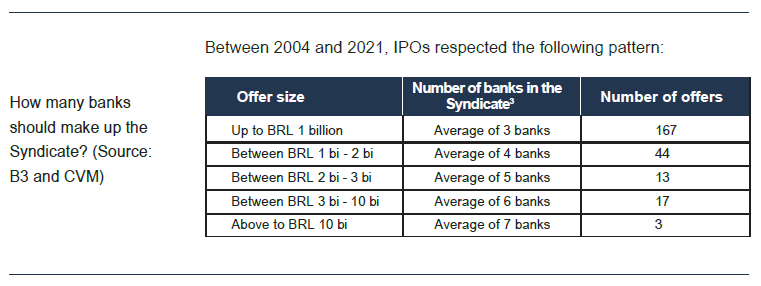
3 Desde 2004, houve 30 IPOs com apenas um banco em seu Sindicato. Nestes casos, os bancos atuaram como líderes e estabilizadores da oferta.
What are the different roles of banks in the Syndicate?
• Lead bookrunner (lead bookrunner): as a rule, this is the role given to oneof the Syndicate banks. He is responsible for leading the process with thecompany, leading the Syndicate of Banks and assisting in the coordination ofthe other advisors, as well as defining the characteristics of the offer (volume,mix between primary and secondary, schedule, etc.), performing the interfacewith regulatory bodies and the exchange, speeding up the process,coordinating bookbuilding, etc.;
• Offer coordinators (bookrunner): are the other banks that make up theSyndicate along with the lead coordinator. Among its main functions areassistance in the preparation of marketing materials for the offer and, mainly,in the execution of the roadshow with potential investors, contributing to thesales force and distribution strategy;
• Stabilizing agent: its function is to carry out operations to stabilize theprice of the company's shares issued on the market. That is, the stabilizingagent must carry out share purchase and sale operations to stabilize theprice after the start of its secondary negotiations. The objective is to avoidhigh volatility of the stock and keep the price above the IPO pricing for aperiod of approximately 30 days. To carry out the offer stabilizationoperation, the bank enters into a private share loan agreement with thecompany's shareholders. In addition, it should be noted that the stabilizingagent may exercise the additional stock option in full or in part during thisperiod. It may or may not be the lead underwriting bank for the IPO.
How many equity operations are banks working on concurrently?
It is fundamental that the IPO process that the company wants to carry out is in the interest of the bank and relevant to it.
Banks working on many offerings at the same time may not be able to give due attention to the IPO in question.
4 Conhecido também como greenshoe, o lote suplementar de ações é uma opção que permite à companhia aumentar em até 15% a quantidade total de ações ofertadas. O greenshoe acontecerá quando a demanda for maior que oferta inicial e pode ser utilizado também como forma de estabilização do preço da ação após o início da sua negociação, em caso de variações bruscas positivas no preço. Já o lote adicional é uma opção que permite à companhia aumentar a oferta em até 25%, anteriormente a precificação, caso o IPO também apresente mais demanda do que o previsto e a companhia decida captar mais com a oferta.
What is the bank’s previous experience in deals in the sector?
The bank plays a key role in the offering, during and after the IPO.
Below, some of the main arear that requires in-depth knowledge of the sector in which the company operates, both from the institution and its professionals.
Investment banking team has, among its functions, the preparation and structuring of the equity story. This material must be sold and capable of transmitting, in a faithful and precise manner, the company's plans its history, current moment, environment and possible macroeconomic / sectoral levers.
Sales/ distribution team, together with the investment banking bankers, are responsible for transmitting the equity story to investors and must be able to answer questions and queries from potential investors.
Equity research team will be responsible for covering the stock after the offering. It will provide the market with buy and sell recommendations and will constantly answer questions from investors about the analyzes and reports issued on the company.
What is the bank's previous experience in equity deals?
The IPO is difficult to execute. It has well-defined deadlines, rules to be followed and requirements to be met. Furthermore, it depends on the banks' relationship with financial investors, that will be the target of the roadshow.
The IPO is dynamic, and each offer has its own peculiarities. The high exposure of the chosen financial institutions to this dynamism will contribute to rapid adaptation of the offer if necessary.
What is the bank's current situation?
The history of transactions carried out in the past may not reflect the bank's current situation. Some banks change their focus over time and the sector is marked by high turnover of professionals.
Is the bank concurrently carrying out deals in the same sector or, in some way, competitors?
When choosing the Syndicate, it is important to know whether the banks desired to compose it are mandated to make conflicting offers with the company or in the same sector.
Investors to be approached may opt for one company over the other, reducing the receipt of potential orders.
How much effort will the bank dedicate to the offer?
As a form of compensation for the banks, a commission is linked to the value offered. It is imperative that this number is sufficient to keep the Syndicate motivated throughout the IPO process, including when compared to the compensation of other offerings.
Normally, the bank advisory fee, usually called offer economics, has two components (i) success fee and (ii) discretionary fee:
• Success Fee: divided among all Syndicate banks equally or not. Commonly, theleading coordinating bank receives a higher share than the others. Between 2004and 2021, the average of this component, as a percentage of the total offer value,was 3.7%;
• Discretionary fee: works as a motivational factor for extra dedication from banksand compensation for positively differentiated performance in executing the offer.The discretionary fee is paid by the company (in the case of a primary offering) orby its shareholders (in the case of a secondary offering) as they see fit, beingdivided among the entire Syndicate, for part of it or just for a bank. It usually variesbetween 0.5% and 1.5% of the total value of the offer, in addition to the successfee.
How to adjust the Syndicate for a better distribution of the offer?
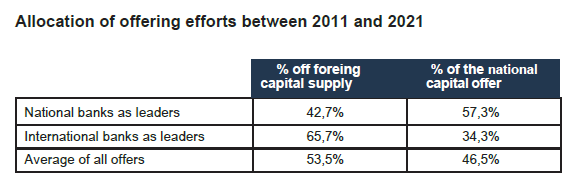
Historically, the Syndicate's composition in Brazil is marked by the inclusion of national banks, with a focus on retail and/or wholesale, and international banks. This occurs because it is relevant for the offer to have the greatest possible adhesion of interested parties, at the indicated price. For this, it is necessary to address a vast number of investors, and banks with different profiles, which have relationships with different groups of investors.
Most of the IPOs in Brazil have a relevant portion of international capital and, many times, international banks contribute to this point.
United and dedicated group: Ensure that there is a good relationship between the different advisors to ensure the smooth running of the process.
Engagement in the offer and in the thesis: The bank's perceived level of commitment to the offering and the underlying investment thesis is crucial to ensuring the service is delivered with the appropriate quality. It is essential that the bank believes in the offer and that the IPO is, in fact, possible. Understanding this motivation is an essential point for hiring.
Offer Timing
“We delayed a window because we took a long time with internal documentation. In the following quarter, the window closed, and we were unable to complete the offer.”
The IPO is an extremely regulated process, with well-defined phases and deadlines, regulated by securities commission and B3. Figure 18 shows an example of a standard schedule for an IPO in Brazil, in accordance with CVM Instruction 160.
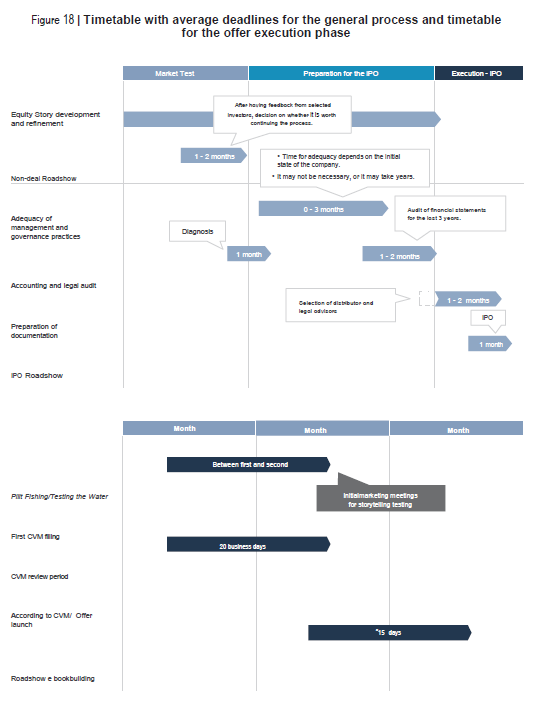
The three main milestones are:
i. First filing with the securities commission: to carry out the offer, it is necessary to file some documentswith the securities commission, making the offer public. Among them, the main ones are the ReferenceForm and the Company's Prospectus. The securities commission then reviews the documents and setsa deadline for a second filing. After the second filing, the company receives new comments from thesecurities commission and carries out a third and final filing with the pricing of the offer;
ii. Roadshow and bookbuilding period: after the second filing with the securities commission, the company isalready authorized to carry out direct marketing of its shares and collect purchase orders of different sizesand prices (a process called “bookbuilding);
iii. Offering pricing: in the third filing with the securities commission, the company prices its offering (we'lltalk more about this process at the end of the section) according to the banks' recommendations, andbecomes a listed company.
In order to meet the determined deadlines and reach the above milestones, it is essential that thecompany is well prepared and aware of all stages of the process and its obligations.
Accounting Reporting Requirements
“Being ready in advance is a huge advantage.”
In order to complete the documentation mentioned in the previous point and comply with securities commission deadlines, companies seeking to carry out an IPO must present consolidated financial statements in accordance with accounting standards, such as International Financial Reporting Standards (IFRS) or US GAAP. In addition, the company must add three years of financial statements audited by an independent auditor registered with the securities commission. In the case of companies with less than three years, the auditable financial statements must cover the entire period since the beginning of the company's operation.
It is worth noting that the level of demand and scrutiny of financial statements increases with a public company. There are many companies already audited and surprised by accounting discussions that delayed the IPO process and, in some cases, even missed a window of opportunity.
In this sense, it is recommended that the company that wants to start the IPO process and is already audited, request a comfort letter from an independent auditor registered with the securities commission (ideally a Big4: PWC, KPMG, Deloitte or Ernst Young). In this way, it will be possible to anticipate discussions and anticipate possible accounting adjustments.
Companies that had received support from private equity (PE) funds before the IPO process were already more accustomed to several of these reporting requirements, a factor that reflected in a smaller percentage of companies with difficulties. The biggest challenge reported by companies not invested by PE funds was in gathering information in the short term, followed by consolidating the financial information of subsidiaries and reviewing annual results for quarterly results (the latter also being reported as a difficulty by 38% of investees standing of the sample) (Figure 19).
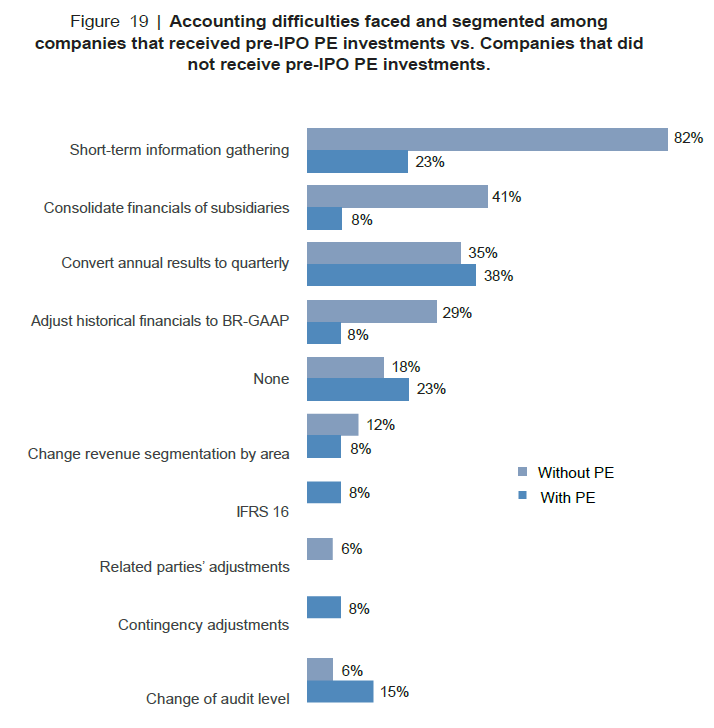
It should be noted that the quality, preparation and fulfillment of obligations related to financial statements not only serve as a prerequisite for going public, but also support the company's image in the market. Consequently, they contribute to the success of their IPO.
“There have been investors who, after the non-deal roadshow, called to ask if they could trust the audit.”
The prior preparation of the financial statements and, if possible, even their audit before engaging in the process was considered by several companies interviewed as an essential factor and a great facilitator to the IPO process.
“The audit process was smooth. We already had the numbers organized internally, and the work to approve/validate them was quick. We recognize that if we had to do everything from scratch it would have been more difficult, and we might not have been agile enough to take advantage of the market window.”
“The preparation of the reference form is something that takes a long time and is certainly one of the most difficult and laborious points of the IPO process in terms of disclosure of historical results. Without prior preparation, this process would be even more painful.”
In addition, after the listing, the company will be obliged to disclose quarterly financial statements, which further increases the importance of a good audit and well-structured processes, aiming to publish quality financial statements within the established deadlines.
Governance Requirements
In addition to the accounting requirements, in order to become a publicly held company and carry out an IPO, it is necessary to comply with the legal and institutional determinations governed by the Brazilian Corporate Law, as well as register with the Securities Commission and adhere to one of B3's listing segments5.
5 More information on B3's different levels of corporate governance can be found at the link: https://www.b3.com.br/pt_br/produtos-e-servicos/solucoes-para-emissores/segmentos-de-listagem/sobre -list-segments/
Corporate governance is the system by which companies and other organizations are directed, monitored, and encouraged, involving the relationship between partners, board of directors, board of directors, supervisory and control bodies, and other interested parties.
The IPO establishes a cultural transformation in the company's organization. After the offering, it is necessary to continue complying with obligations related to corporate governance, which may require the improvement of internal controls aimed at reducing the company's information asymmetry vis-à-vis shareholders and the market. In addition, public companies, by definition, have greater visibility vis-à-vis the stakeholders with which they relate, given the volume of information disclosed to the market. In this sense, corporate governance will help the company to convey its image to investors and information vehicles, with adequate transparency.
Some examples of market transparency obligations:
Disclosures of quarterly and annual financial statements: The company's performance must be disclosed up to 45 days after the closing of the quarter for the 1Q, 2Q and 3Q and, the annual ones, together with the 4Q, within 90 days.
They are disclosed through newsletters for shareholders. The income statement is always performed using forms, with the ITR for quarterly information and the DFP for annual information.
Relevant facts: A relevant fact is important information presented by publicly held companies and, therefore, must be disclosed to the market. It is characterized by influencing the quotation of securities.
It is up to the investor relations department to disclose and communicate this type of fact to the securities commission. The same must be disclosed before the opening or after the closing of the market.
They must be publicized through large circulation newspapers used by the company or through at least one news portal with a web page and free access to information in its entirety.
Notice to the market: Notices to the market have more flexible characteristics and, as a rule, should not influence the value of the share.
Some of the subjects covered by notices to the market are: market share, introduction of a new product line, details about the company's operation, changes in management and increase in the participation of relevant shareholders, among others.
It is valid for companies to present consolidated information, although there is no securities commission instruction that emphasizes this.
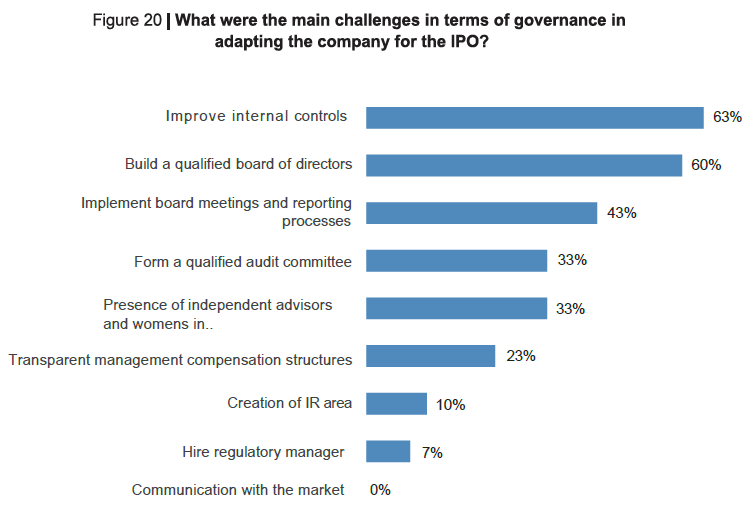
In the same way as having an organized accounting, having governance standards in line with previously established requirements is essential for the IPO process to run smoothly.
It is usual for investors to ask about the company's management during the roadshow. Organizations with a high level of professionalism usually conveys security. Taking this into account, among those interviewed, it was common to hear that the presence of a financial investor in the company contributes a lot to this message.
“Regarding the governance structuring process, having the private equity fund behind it helped a lot in creating a management compensation structure, in addition to creating committees and making suggestions for the board.”
Additionally, when talking about governance in an IPO process, it is necessary to comment on the need to create an Investor Relations (IR) area.
Opinions differ on the timing of the creation of the RI. Many commented that the IR should be constituted in advance, while others indicated that this upfront expense is unnecessary, as the IR only becomes indispensable for the company when it becomes listed.
Regardless of when the Investor Relations area will be set up, most indicated this point as a difficulty in the process.
“It was a challenge to compose and retain the IR team... it is difficult to find professionals who understand your business in detail, for this reason the prior creation of the area can enable a better service to investors/market after the IPO ... if you let to set up an area only when it goes public,
most likely you will have an IR team that is unprepared in the first post-IPO months.”
Pricing and execution of the offer
“Previous work to open a communication channel with investors (Non-Deal Roadshow) was relevant for the company to be known by the time of the IPO.”
After fulfilling all the aforementioned requirements and going through the roadshow process with potential interested parties, the Company must have an idea of the interest and demand of investors at different levels of evaluation. Based on the perceptions extracted from these meetings and, together with the recommendation of its advisors, the company will decide whether or not to proceed with the bookbuilding process.
Choosing to move forward in the process, the company will determine the price range per share offered to the market. Bookbuilding is the stage of receiving orders from investors for the acquisition of different volumes of shares at different prices, as long as the interval determined by the company is respected (usually called the price range). After receiving all the orders, the company will decide whether or not to price the share and, consequently, go to the market at the determined price.
The pricing decision is not always intuitive. Common sense points to choosing the highest possible price for the offer, but this decision can impact the price and trading volume of the share in the post-offer period, directly reflecting a positive or negative message to the market.
Some situations can happen. If the stock is priced at the top of the range and the book guarantees close to just one time the volume of shares offered, the stock may not perform positively on the day following the offering. This indicates that it was launched at the maximum price the market would be willing to pay for that stock, coupled with the fact that there was limited demand.
This same pricing example (at the top of the indicative range), but with a much higher demand than the number of shares offered (for example, three times or more) could indicate that the company was undervalued. In that case, the stock is more likely to rise the next day.
The last example, however, does not always guarantee that the company and/or shareholders made the best offer. In this situation, most likely, the company and/or shareholders would be failing to obtain the highest financial volume for the sold shares.
It is important to mention that, regardless of the demand for the offer, the pricing must consider the company's interests for the profile of its shareholder base. Investors who will have these shares traded on the exchange must be balanced so that the share, ideally, does not have a lot of volatility and, at the same time, has a relevant volume traded. This ensures liquidity and stability for the post-IPO action. In addition to the technical issue of forming the investor base, it is worth ensuring alignment with the long-term thesis. Investors who are really on the company's side will be able to support it in more difficult times and dialogue with managers to help with the strategy over time.
After the Completion of the IPO
After pricing the offer, the shares are traded on the stock exchange, and it is said that the IPO process has ended. However, as pointed out in the previous sections, the requirements and needs of transparency to the market become part of the company's routine. With this, it is natural that there are pros and cons in being a listed company. In summary, 92% of respondents concluded that the benefits outweighed the negative points of being a company with such obligations, recognizing that the IPO, in general, was positive for the company (Figure 21).
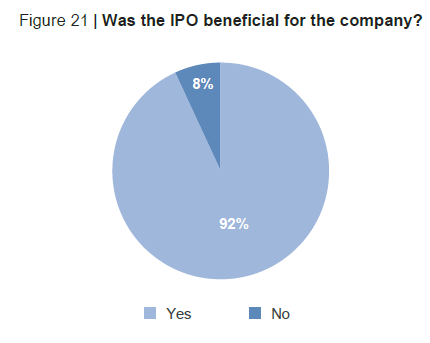
Strengths
Regarding the main positive points mentioned, access to capital can be considered as the main advantage of the IPO, with 70% of interviewees mentioning this point.
The second point mentioned was the brand strengthening of a listed company, with 60%. Other highly mentioned benefits were attraction and retention of talent, and access to better terms for raising debt (Figure 22).
“The listing process, even incomplete, greatly improved our access to credit lines.”
“The professionalized board has contributed a lot to the business, even without the IPO.”
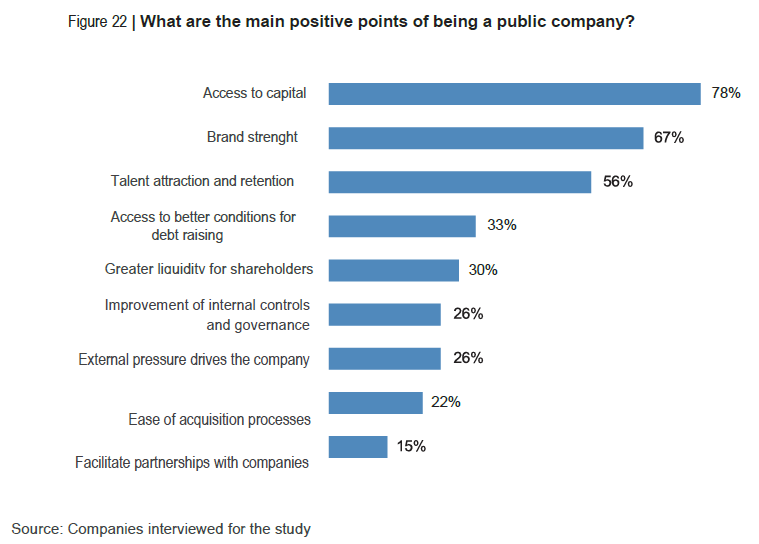
Counterintuitively, a positive point mentioned was the pressure exercised by new shareholders and managers of large equity funds, when present in the company's shareholding structure. 23% of entrepreneurs mentioned how contact with these financial market managers, linked to the questions and insights they bring, can contribute to the development of the organization, whether with recommendations and different views from the board or simply demanding results and deliverables.
“Company is “driven” by external charges. The external charge can have more power than the founder himself... Funds often have an external and macro vision that is not obvious to the company.”
Negative Points
By becoming public and/or listed, companies start to operate under the watchful eye of the market, and this experience is not always positive. The effects resulting from this inspection are behind the negative points most cited by the interviewees, as shown in Figure 23.
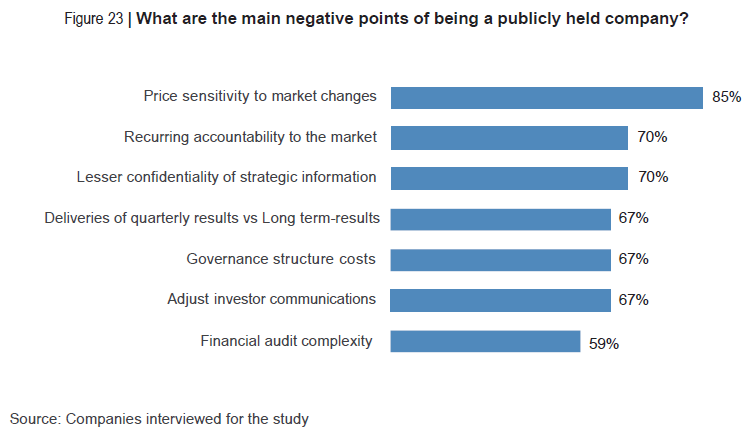
Brazil is a country of uncertainties, in which macroeconomic volatility can be very high, and many of the shares of companies involved in the period of this study have suffered constantly since its listing with price fluctuations. Some have had their market cap devalued by around 70% since the IPO, and others experience low liquidity in the stock, with the volume traded on the stock exchange being drastically reduced. In this context, 77% of the interviewees presented the sensitivity of the share price as one of the main negative points when going public.
The pressure to deliver quarterly results and the recurring accountability to the market are the most frequent points in the speeches of the companies. One of the executives stated:
“The market is short-term; it is not always prepared to receive long-cycle companies.”
“The quarterly pressure for results can be a difficulty for the execution of the company's long-term strategy."
In addition, the lower confidentiality of strategic information and the costs of governance that meets the standards required of the company's listing segment were cited by approximately 60% of respondents. Other points considered negative by more than half of respondents were the need to adjust communication with investors and the complexity of financial auditing.
Key Learnings and Recommendations
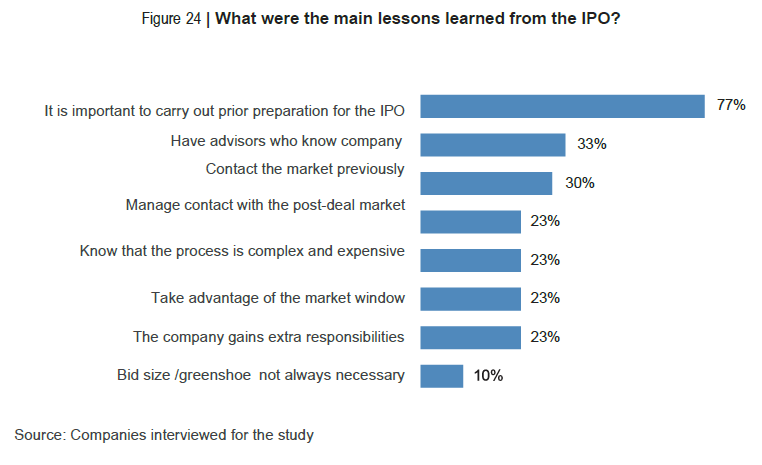
After the IPO, it is possible to carry out a retrospective analysis and identify which were the greatest lessons learned. For most executives, what stood out was prior preparation. The IPO process is long and demanding, with documents, adaptations, governance structures, and all the other requirements made by regulatory bodies that compromise hours of the companies' teams. Anyone who has gone through the process recommends prior preparation, so that it takes place as smoothly as possible.
“I believe it would be positive for companies to have two years of experience as a public limited company.”
Due to the volatility of the Brazilian capital market, it was recognized in many of the interviews that it is crucial to understand the opening of windows for IPOs. The stocks of many of the companies interviewed are suffering, and most executives attribute this to the timing of the IPO.
“Prior preparation to be able to take advantage of a good window when it appears.”
In addition to market preparation and timing, another relevant part of the IPO process is the choice of the company's financial advisors. Most executives say that advisors can have a significant impact on the result and that, to maximize the chance of success, it is necessary to choose agents who, above all, know the company well and know how to sell it to the market.
A fourth point that appeared less frequently, but in a very forceful way, was the care taken in choosing the allocation of the offer among the investment funds. It is important to bear in mind that different funds can have different profiles. Some tend to hold a position in the stock for a longer time, which ends up not pushing the price down, and does not contribute to the stock's liquidity. Others target short-term gains, generating liquidity, but often causing negative pressure on value. Some businessmen cited the importance of balancing these profiles well, forming a diversified shareholder base linked to the company's interests.
In a long process such as the IPO, it is common to have points that the company's management would have acted differently. Among them, the most noted among the executives was to carry out a more time-consuming and organized process. 30% of respondents mentioned this point (Figure 26).
“Hoje, eu consideraria até mesmo realizar uma 476 para ter a diligência mais curta e gerenciar melhor o timing da oferta.”6
6 Offer with restricted efforts
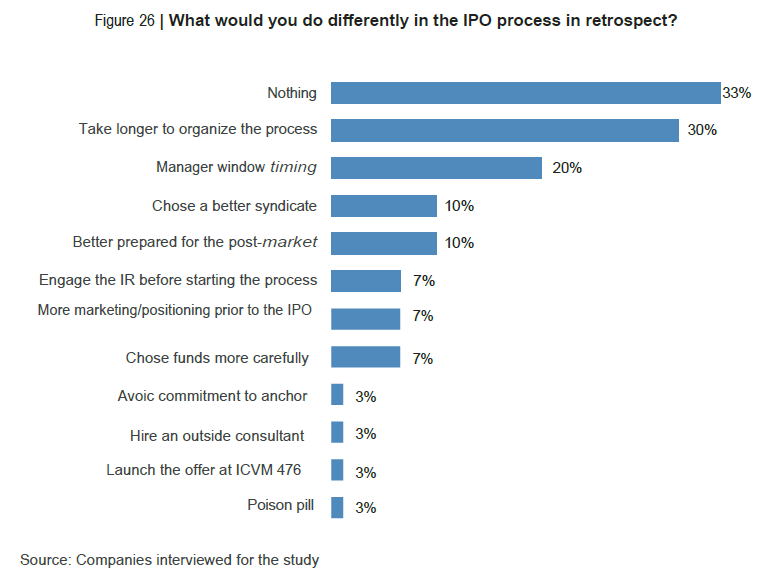
When looking at the points listed regarding what could have been done differently in the process, the point of having more time to organize is related to the points mentioned about preparation and the window timing mentioned between learning experiences. The IPO process is often rushed and stressful due to the lack of prior preparation on behalf of companies, combined with the need to take advantage of an eventual market window.
Definitely, the biggest difference for companies in the post-market is how to deal with new shareholders, which range from fund managers, wealth managers and individuals who invest in the stock market. It is clear that shareholders who do not have a relevant stake in relation to the company as a whole will have less influence over the company, however, by generating value for one shareholder, the company generates value for all. When asked what was the main lever for creating value, most executives answered: “Simple, deliver what you promised” (Figure 27).
“The most important thing is to deliver what was agreed, that is, what was promised during the IPO.”
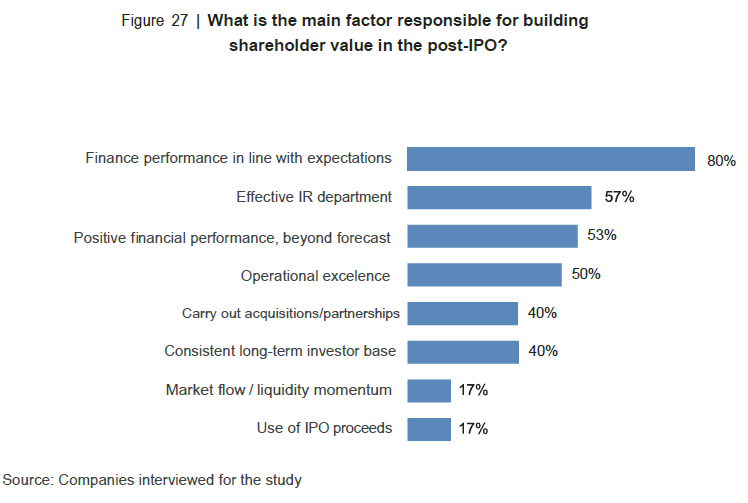
In addition to delivering what was promised, another point that was highly emphasized was constant and effective interaction with the market. This comment touches two aspects. The first is the company's transparency, and most executives believe it is necessary to establish a strong relationship of trust between the company and the market, that is, to share future plans and operational and financial numbers with investors, in addition to making themselves available for dialogue.
The second aspect, already mentioned above, is viewing interactions with fund managers as something useful: respondents believe they have a lot to gain by listening to their investors' provocations, which often bring interesting insights to the company.
Conclusion
“Through the IPO, a virtuous cycle of commitment to generating value for society and growth is created.”
The IPO, at the end of the day, is something beneficial for the company that aims to do so, according to the responses of 92% of respondents.
In addition to access to capital, listing on the stock exchange increases access to other sources of funding and enables intangible gains that are often difficult to measure, such as strengthening the company/brand name in the market, impacting, for example, the attraction and retention of talent.
However, an IPO process is known to be time-sensitive, costly and demanding. Understanding the importance of prior preparation was cited by approximately 77% of respondents as the main learning process. If they could go back, about a third of companies said they would have spent more time organizing the process. With this, it is possible to conclude that for the process to flow well and be less exhausting, prior preparation is essential.
Interviews indicate that companies that brought financial partners, such as private equity funds, before the IPO process, went through the “house organization” process earlier. Consequently, these companies had fewer difficulties during the preparation of the process, generally facilitating the offer.
It is worth mentioning, however, that for the success of the process it is not essential to have a background in the Company's corporate structure. The construction of a well-elaborated equity story, added to the fact that the company is ready (that is, with an audit carried out, board and internal controls already in place, among other factors), have been shown to be important pieces for the conclusion of an attractive offer to investors and successful for the company and its shareholders.
“Everything you do at the last minute is more expensive, it's the price of urgency.”
After the IPO, companies need to know how to deal with new shareholders. The most relevant point for the company to please and have the confidence of new investors is to have a financial performance in line with expectations. Therefore, a well-crafted storytelling consistent with what the company will be able to deliver as a public company is essential to enjoy the advantages of having its shares traded on the stock exchange.