

Every entrepreneur has at some point considered the alternatives available for raising funds for their business, whether to expand their operations, invest in new projects, or raise working capital. The question of whether to invest through equity or debt is common in the corporate world, and the decision between these alternatives is complex because it involves managing factors such as timeframe, liquidity, volume, capital structure, and other intangible strategic aspects.
The alternatives are not mutually exclusive, and the best capital structure will depend on the individual assessment. For example, a debt with third parties may provide capital that requires less influence over the company's day-to-day operations, as it analyzes and prioritizes the payment capacity of the contracted transaction.
This can be positive if the current shareholder doesn't want to face external pressure on their strategic business decisions or doesn't want to share in future results. However, in some cases, the acquisition of a stake in the company by an experienced player can boost the growth levers of the business model and generate value in its day-to-day operations.
Therefore, analyzing the advantages and disadvantages of fundraising alternatives is essential for decision-making. Furthermore, there is no single answer to decision-making and it varies depending on the company's current situation and the market in which it operates. We recommend that shareholders and executives continually review their business plan and the most efficient capital structure for their company's current situation.
Momento da captação financeira
O acesso ao mercado de capitais varia conforme as características de cada Companhia, além do impacto de condições macroeconômicas.
Durante uma primeira emissão, o mercado costuma ser ainda mais rigoroso com a análise feita sobre a empresa – e os investidores se atentarão ao nível de profissionalização, à destinação dos recursos e ao tamanho da empresa.
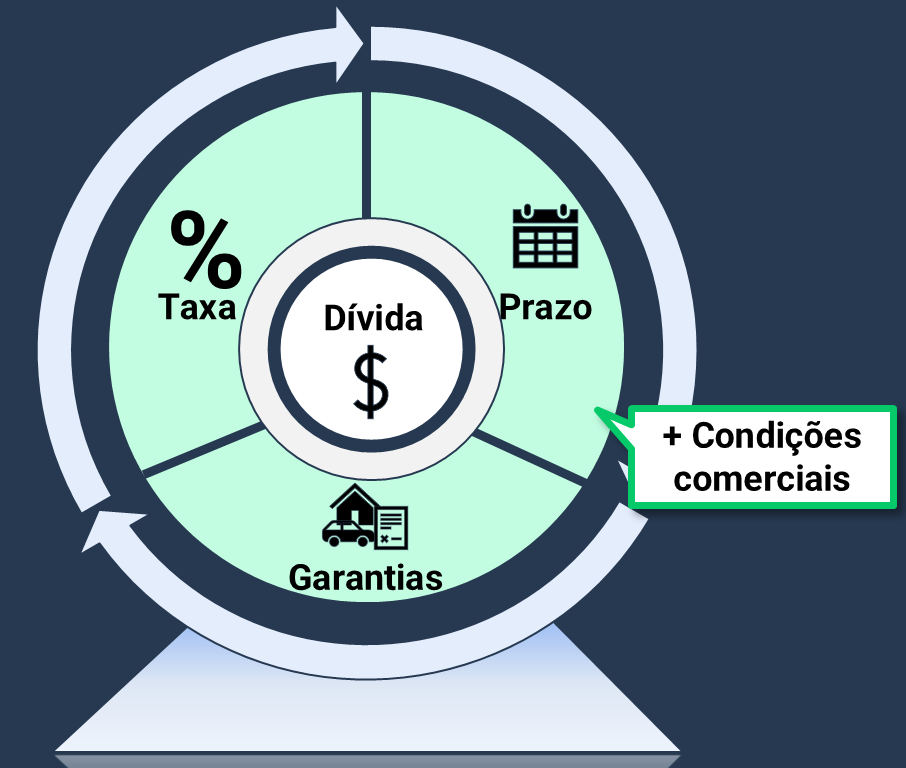
Para mitigar os riscos, a empresa deve estar atenta às variáveis mais importantes: taxa, prazo, garantia (tripé financeiro) e cláusulas comerciais. A maximização do resultado é encontrada através de um equilíbrio destas condições.
Momento da captação financeira
Taxa, prazo e garantia são as principais condições que interferem nas negociações de crédito
Nível de profissionalização
- Demonstrações financeiras auditadas e controles gerenciais adequados
- Padrões de governança e gestão corporativa
Destinação clara dos recursos
- Esclarecer como serão utilizados os recursos da operação
- Características específicas (e.g. ESG) podem atrair a atenção de investidores
Capacidade de pagamento da Companhia
- Análise sobre os indicadores financeiros e seu market share
- Demonstrar que as condições da dívida permitem fluxo de caixa positivo