The Ruin of Bitcoin
Dear investors,
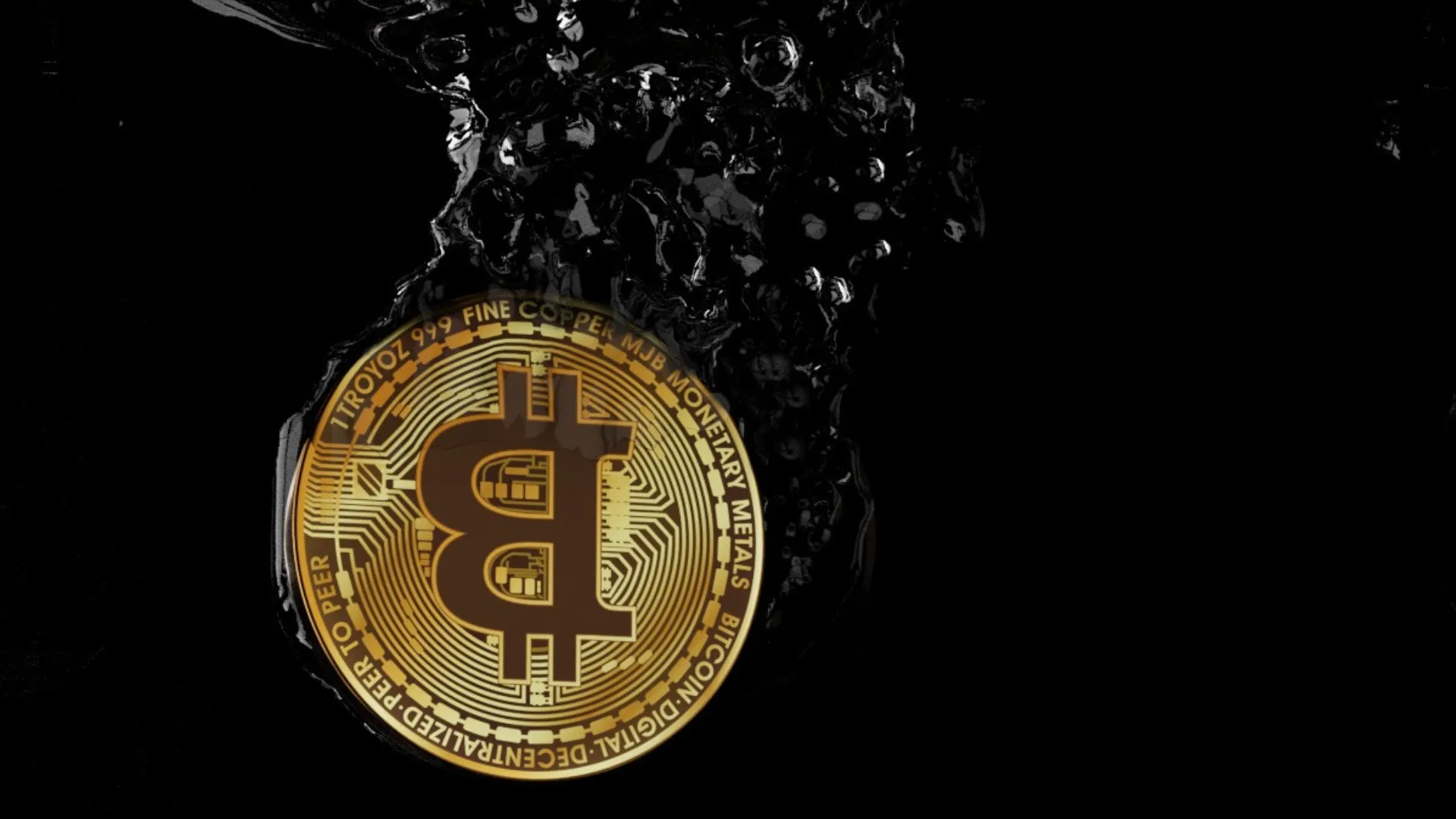
Bitcoin peaked in November 2021 at around USD 68,000. From its peak until June 30, its price fell by around 70%.
We've always avoided any investment in cryptocurrencies, but the topic has become so prevalent in the financial market that, almost involuntarily, we've followed Bitcoin's history unfolding over the years. We imagine you've also followed this story to some extent, so we'll use it as a backdrop to explain some fundamental concepts of our investment philosophy.
What defines economic value
In abstract terms, the value of an asset is how much benefit a person perceives there to be in owning it. In practical terms, it's the price that person is willing to pay for it in current currency. Note that the subjectivity of this definition is part of our economic reality: the value of things varies over time and depending on the circumstances in which they are purchased and sold. However, this subjectivity is not the same for all assets.
Some values are much easier to understand and predict than others. You certainly have a good idea of your car's value. If you decide to sell it, the market price range isn't very wide. This scenario changes completely if you have a painting. You might get completely different offers for the same painting in the same month. Or you might discover that you're the only one who likes it and get no offers at all.
A first implication is that, if one day your neighbor decides to move to another country in a hurry and put everything up for sale, it is much easier for you to determine at what price it is worth buying his car than what price it is worth paying for his paintings, if you intend to resell what you buy.
Some factors make the price of a car more stable and predictable: there is a production cost that serves as a lower limit on the value of the car, its usefulness as a means of transportation is quite objective and perceived similarly by different people, and there are several substitutes (other means of transportation) with which you could compare your car to estimate a price on a relative basis.
None of these factors are present in Bitcoin: the production cost is practically zero (the only cost is transaction processing, but even so, it's quite low), there's no objective utility that everyone agrees on, and it makes no sense to try to price it by comparing it to other assets. Therefore, its pricing is extremely subjective, making it impossible to estimate the price at which it would be possible to invest in it in a minimally safe manner.
Productive vs. non-productive assets
Another vital aspect of selecting assets as investments is understanding the value you would be able to extract from them if you could never sell them. In the example of the car, if you used it for decades until it no longer ran, you certainly wouldn't have lost the money you spent to buy it, since it served you well all that time. In the case of stock investments, if we buy shares of a good company that generates profits and distributes dividends at an attractive price, we can earn an excellent return even if we never sell them.
In fact, most existing companies are not publicly traded, yet they continue to have value for their owners. This proves a truism: a business's value comes primarily from its ability to generate income for its owners, not from the existence of a daily price quote for its shares.
Thus, when investing in a productive asset, you simply need to ensure that its purchase price has a high chance of generating an attractive return, considering your expectations regarding the future profits the asset will generate. The asset's future price is relatively important. If this price never rises, you won't be able to make money reselling your investment, but you will continue to receive the income the asset produces. In practice, productive and profitable assets rarely remain mispriced forever, so your "risk" is that your asset will depreciate for a few years. Over longer periods, you're very likely to have good opportunities to sell it.
This reality is quite different when investing in non-productive assets. Without the ability to generate any income, your return depends solely on how much someone else will be willing to pay for your asset in the future. In addition to this factor, which already represents a significant risk, there are no objective methods for calculating the price of a non-productive asset. In other words, the decision regarding the asset's future price, which will determine its return, is completely subjective.
Bitcoin is a non-productive asset, and its pricing is subjective, depending solely on people's beliefs about its value. Thus, its price fluctuates significantly over time and depends more on the psychology of the investor masses than on any tangible factor. Therefore, investing in Bitcoin (or any other cryptocurrency) is highly speculative.
The bubble cycle
There are two major problems with speculative investments. The main one is that, when buying an asset at a price that would only be justified by a future much more glorious than the past, the risk of capital loss is high. It's enough that the future isn't as bright as supposed. The second problem is that, when the price moves away from objective assessments and becomes dependent on investor psychology, it becomes extremely volatile and tends to go through the cycle of bubble emergence and bursting.
We've already experienced several investment bubble stories, and the dynamics of this phenomenon always follow the same archetype. First, a new asset emerges with promises of exceptional returns for those capable of understanding how "revolutionary" the new development is. Most of the population remains skeptical, but enthusiasts invest and become evangelists, their faith redoubled by the financial interest generated. Gradually, they attract more and more investors, creating a cycle of rising prices. At this point, the impossibility of objectively calculating the asset's value becomes an advantage for the upward movement, as there is no way to defend a maximum price. After some time watching the asset's price rise, skeptics begin to convert. Even without believing in the fundamentals, they see "visionaries" making money effortlessly, and the fear of being left behind kicks in. So, they decide to invest, sometimes rationalizing that it's almost like insurance against the potential regret of having been one of the few who didn't invest if prices continue to rise. As long as new people decide to make new investments, regardless of price, the upward price movement continues.
However, this upward movement depends on a continuous flow of investment to sustain itself. Since the asset generates no income for its owners, these investments must be made with external funds, and inevitably, one day, this capital will run out. At the end of the cycle, those who had some sympathy for the asset have already invested and have no extra capital to continue buying, so there's no one left to buy.
When a bubble bursts, the dynamics reverse. With few buyers remaining, selling pressure begins to increase, the price begins to fall, and the decline drives away more and more investors. There's no way to calculate the minimum value the asset should have, so prices continue to fall, and the fear of being left behind once again emerges, but this time in the form of being the one who didn't sell quickly and ended up losing out. The downward movement feeds back on itself, and it's difficult to predict how long it will continue. Often, the invested amount is reduced to nothing.
Anti-bubble investments
To avoid the risk of losing money investing in bubbles, just follow two simple rules: don't buy anything you don't know how to price, and don't overpay for anything you've priced. This doesn't guarantee that the investor won't lose money, but it avoids most cases where losses can be quite large.
The strategy we follow at Ártica Long Term follows this line of thinking. We buy shares of good companies at very attractive prices, so our returns don't depend solely on price increases. For example, some of our older investments have already paid us more in dividends than we paid for the shares we purchased.
Investing this way, the risk lies entirely in the possibility that the invested company will generate worse-than-expected results. Stock price volatility itself is less of a concern, because if the price rises well beyond our estimated value, it's obviously not a problem. We simply sell. If it falls significantly below our estimated value, we can buy more shares, and the return on investment will come through the dividends generated.
Note that we will be in a very different position from owners of non-productive assets, who depend on external funds to continue purchasing, as we can use the dividends distributed by the company itself to increase our stake in the business. Furthermore, while non-productive assets do not have a minimum price, assets that generate recurring cash will never turn to dust. Although there is no exact value for their minimum price, if the relationship between price and the business's cash-generating capacity decreases, it will reach a point where investors will be willing to buy even in crisis scenarios.
The method matters
A concept we've embraced since the inception of Ártica Long Term, 9 years ago, is that we should always invest based on a method that, on average, generates good long-term results. It's vital to understand that rational and judicious decisions can lead to poor results, just as irresponsible decisions can sometimes lead to good results. Therefore, we maintain strong focus on the investment analysis and selection process, ensuring we consistently apply the principles that have brought us good returns over the years.
American investor Joel Greenblat brings up a very similar idea, in a less subtle way:
“Choosing individual stocks without any idea of what you're looking for is like running through a dynamite factory with a burning match. You may live, but you're still an idiot.” ― Joel Greenblatt