
The Fog of War
Dear investors,
Our last letter discussed the difficulty of predicting the macroeconomic outlook, and a week after it was published, Russia invaded Ukraine. History shows that wars are always unpredictable and full of twists and turns, so any inference about the future becomes a very challenging task.
In this letter, we would like to share our reflections on the current situation and tell you what we have been doing at the Ártica Long Term FIA.
The uncertainty created by war
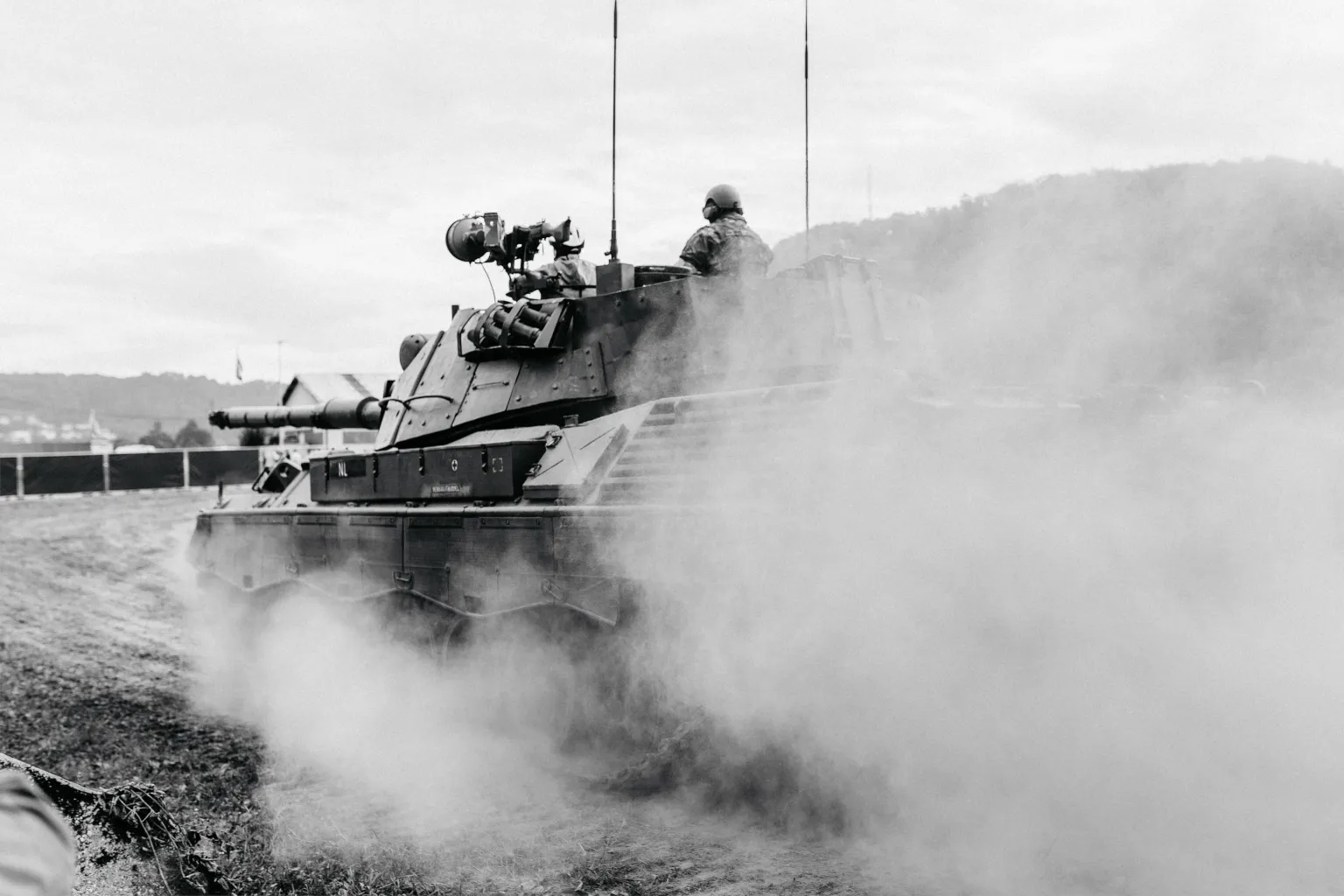
"Fog of war" is a military term that describes the difficulty in obtaining reliable information about what's happening in the midst of combat and, consequently, the difficulty in formulating a plan of action. New information, both true and false, arrives constantly, and decisions must be made with a good deal of uncertainty.
Beyond military conflict, wars are also fought on an economic level. Damaging the enemy country's economy to make it unable to bear the high costs of military conflict is a classic strategy we are seeing in practice during the war between Russia and Ukraine, in which several Western countries decided not to engage in military conflict but openly entered into an economic war with Russia through sanctions packages.
Given how globalized and complex the economy is today, these sanctions don't just affect the countries and sectors directly involved. As they break supply chain links (and establish new ones), sanctions have broad and difficult-to-predict indirect effects, cascading to numerous companies around the world that were not intentionally targeted but become part of the collateral damage. Furthermore, sanctions can emerge or disappear in short periods of time, further thickening the fog that also spreads over the economic sphere.
Estimating the duration, scale, and economic impact of wars is virtually impossible, so we won't make any statements in this regard. However, this doesn't prevent us from trying to understand the impact this uncertain scenario has on the markets and reflecting on the most rational approach to managing our investments during this period.
The fear of the unknown
Fearing the unknown is a primitive human behavior and, to a greater or lesser extent, is present in all of us. In several studies, researchers have shown that unpredictability creates discomfort in most people. In one of these studies, participants were subjected to a game in which mistakes caused small electric shocks (which did not cause damage, but hurt), and their physiological responses related to stress (such as changes in pupil diameter) were measured by the researchers. The result was interesting: in games in which participants experienced a series of moments in which they had a 50% chance of receiving shocks, the level of stress they experienced was greater than in situations in which they were exposed to a predictable sequence of shocks, which occurred with a 100% certainty. Although counterintuitive, since any chance below 100% should be better than the certainty of being shocked every time, it is how human instinct works.
We find this topic relevant because it allows us to understand that psychological factors affect professional and sophisticated investors in the same way they affect everyone else. In general, sophisticated people are less likely to admit when their actions are influenced by their fears, but they continue to live with them.
In times of great uncertainty, the possibilities that the future holds are left to one's imagination, and the bleakest theories tend to garner the most attention. Thus, an investor's instinctive behavior in these moments is to seek out asset classes that seem the safest, even if they have a risk-reward ratio that would be interpreted as unfavorable under normal circumstances.
There is a second psychological factor that we understand is contributing to what we are seeing in the markets.
The availability bias
To care about something, you first need to remember that it exists. Because our memory is highly dependent on the number of times we've received information and how recently we've encountered it, we tend to care much more about topics currently in the news, or that have had a significant presence in our recent past, than about all the other aspects of the world that are still ongoing but currently out of focus.
This tendency to overestimate the importance of information that comes to mind most readily is called availability bias: one of several cognitive biases that skew human judgment away from pure rationality. This bias can cause exaggerations both in moments of optimism, when we only remember the good things and neglect the risks, and in moments of pessimism, when we overemphasize the risks and make them seem greater than they actually are.
Every topic widely covered by the media ends up triggering availability bias in many people. During the pandemic, for example, many were more concerned about the risk posed by Covid than about all other life-threatening risks, which continued to exist during the same period. Now, with the war between Russia and Ukraine being reported daily, the tendency is for our concerns to shift to it. Note that we are not underestimating the severity of either of these events, simply emphasizing that there is a bias toward increasing the weight given to these factors relative to what would be attributed to them if we were purely rational.
Now, let's look at how these factors have influenced the stock market.
A feedback loop
In recent months, we've seen several negative factors emerge almost simultaneously: i) the Omicron wave of Covid, which reignited concerns and issues related to the pandemic; ii) interest rates in Brazil have nearly doubled from September 2021 to today, encouraging investors to migrate from the stock market to fixed income; and iii) the war between Russia and Ukraine began, triggering a series of economic sanctions. This news is objectively bad for the economy as a whole, so it was expected to cause negative market reactions. Additionally, we have two significant sources of uncertainty: the unpredictable course of the war and the approaching presidential elections amid a highly polarized political landscape. The way all of this has aligned during this period tends to trigger a self-reinforcing cycle of pessimism.
This cycle can unfold as follows:
- Negative news causes an initial drop in stock prices;
- The fall itself generates concern among investors, who begin to pay greater attention to the risks to which they are exposed;
- The elements of uncertainty in war and elections make it difficult to measure their economic impacts, which causes fear and anxiety among investors;
- Defensively, many migrate their equity investments to other asset classes, putting further pressure on stock prices;
- The continued decline brings more media attention, the availability bias becomes increasingly present and the cycle is fed back.
The tone may seem pessimistic, but our reflections seek to assess whether the current pessimism is overstated, so we can position ourselves accordingly. In this sense, we will briefly discuss the impact of the war on the companies invested in by Ártica LT FIA and then discuss our current approach to managing the fund.
The impact of war on our portfolio
We'd venture to say that this is one of the moments when there are advantages to being Brazilian. With Brazil far from the battlefields, little involvement in the geopolitical issues related to the conflict, and striving to remain neutral in international relations, the impact we suffer tends to be limited. The main focus is on the commodities market, which ends up interfering in the cost structure of various economic activities.
For our portfolio, we expect a limited impact, as our invested companies do not consume large volumes of petroleum products (commodities most affected by the war), do not consume agricultural inputs (affected by Russia's role in supplying fertilizers to Brazil), and have most of their demand coming from the Brazilian market itself. A possible negative impact could arise from a rise in the price of steel and aluminum, which are significant cost components for some of our invested companies. However, Russia currently accounts for only ~4% of global iron ore production and ~2% of global aluminum oxide production, so any supply disruption is much less impactful than in the case of oil, where Russia accounts for ~12% of global production.
Despite the limited impact of the war, our portfolio's price has been falling in recent weeks. Part of the decline is certainly related to rising interest rates and Brazilian political uncertainty, but part of it appears to be related to the effect of the uncertainties and biases discussed above. In any case, the decline isn't necessarily bad for us. We explain below.
Still going against the grain
A perfectly rational concept, but one that goes against the instincts of most investors, is that a falling stock price is beneficial as long as we are still looking for new purchases (as long as it is not accompanied by a deterioration in the earnings prospects of the company being purchased).
An example that helps illustrate the point: if you're building a house and plan to buy building materials over the next year, is it better if the prices of those materials rise or fall during that period? You'll feel better about your past purchases if material prices continually rise, as they will all have been made at lower prices than they are now, but the final cost of the house will be higher. Conversely, past purchases will seem like bad deals if prices are falling, as you would have paid less if you had just waited, but the total cost of the house will be lower.
We still have cash available in Ártica LT FIA, and we are one of the few funds in the market currently experiencing positive net inflows this year, so the price drop is welcome. Without ignoring the complexities of the situation, re-examining our theses frequently and applying an extra dose of caution to each decision, we continue to move in the same direction we discussed in our last letter: we are buying shares of good companies that appear to be cheap, and our team continues to make new contributions to the fund.
One final comment is that our best investments were made when we found opportunities with solid fundamentals and general market sentiment was against our move. In a way, it couldn't be otherwise, because when everyone is buying, stocks become expensive, and when everyone is selling, they become cheap, making following the crowd a poor investment strategy.
“Be fearful when others are greedy and be greedy when others are fearful.” – Warren Buffet